 Americano Padel Manager
 All Padel Shots Explained: Complete Guide from Beginner to Expert
Padel features more than 20 different shots, from the simple forehand to the spectacular par 4 and dormilona. Each shot has its moment, its court zone, and its difficulty level. This guide covers every padel shot, organized by level, with essential technique and common mistakes to avoid.
What makes padel unique among racket sports is the use of glass walls. They create shots that exist nowhere else: the contrapared, the bajada, the double wall. On top of that, padel has its own overhead shots like the bandeja and the vibora. This technical richness is what makes the sport so captivating.
Why Padel Has So Many Different Shots
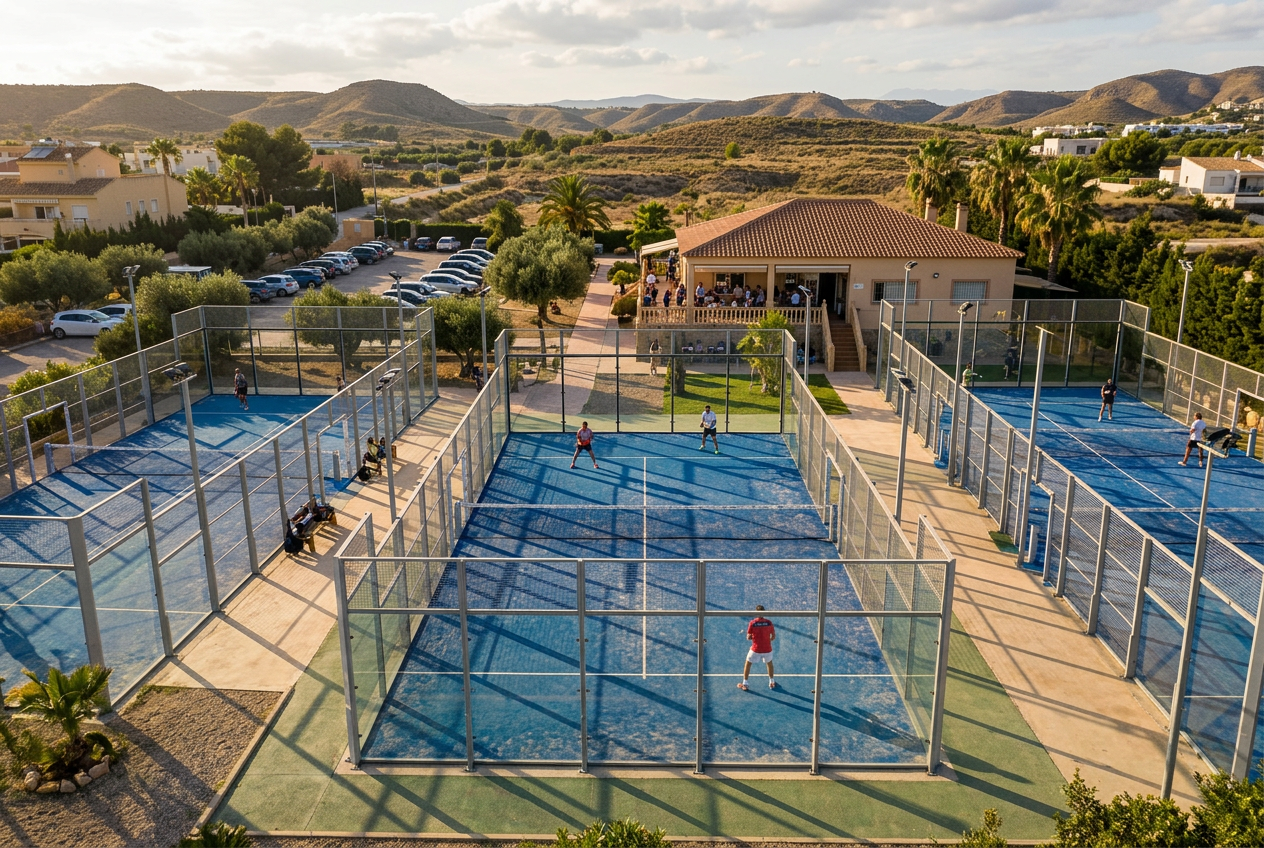
In tennis, the court is open. In padel, four glass walls and a metal fence transform every rally. The ball bounces off the glass walls, comes back into play, and sometimes leaves the court entirely. Each situation requires a specific technical response.
Padel shots can be grouped into 6 main categories:
- Fundamental shots: forehand, backhand, serve, volley, lob
- Intermediate shots: smash, drop shot, back wall return
- Advanced net shots: bandeja, vibora, gancho
- Advanced baseline shots: chiquita, bajada de pared
- Wall play: contrapared, double wall
- Spectacular shots: rulo, dormilona, Gran Willy
Fundamental Shots (Beginner Level)
These five shots form the foundation of every padel player’s game. You simply cannot play without mastering them.
The Forehand and Backhand
The forehand (derecha in Spanish) is the most common shot in padel. The swing preparation is shorter than in tennis: no need for a big windup since the court is smaller and the racket has no strings. Focus on control over power.
The backhand (revés) is best played with two hands for greater stability. The keys: shoulder rotation, firm wrist, weight transfer forward. The sliced backhand is very useful for keeping the ball low.
Common mistakes: overly long backswing (a tennis habit), trying to hit too hard.
The Serve: 5 Variations You Should Know
The serve in padel must be hit underhand, after a bounce. The goal is not an ace but placement: a good serve opens the door to the net.
The 5 types of serve:
- Flat serve: reliable and consistent, ideal for second serves
- Slice serve: the most effective, with lateral curve and a low bounce off the wall
- Kick serve: high and deep bounce, pushes the opponent toward the back
- Body serve: aimed at the returner’s body, limiting their range of motion
- Wall serve: the most tactical, bounces in the service box then deflects off the side wall
Golden rule of the serve
Serve and rush to the net immediately. A player who stays at the back after serving loses the advantage.
Common mistake: going for power instead of placement.
The Volley: The Dominant Shot at the Net
The volley (volea) is the most played shot in match situations. In padel, the team that holds the net controls the point. Keep the swing short, compact, racket held high in front of you.
There are several types of volleys:
- Low volley: ball below the net, the most delicate, purely defensive
- Mid-height volley: between the net and shoulders, the most frequent
- High volley: often sets up a smash
- Block volley: uses the opponent’s ball speed, minimal movement
- Attacking volley: accelerated to put pressure on
Common mistakes: swing too wide, racket too low in the ready position, wrong distance from the net.
The Lob: The Most Important Shot in Padel
The lob (globo) is considered by every coach as THE most strategic shot in padel. It structures the entire game: the lob is what allows you to reclaim the net, push opponents back, and build points.
A good lob should pass 2 to 3 meters above the opponent’s outstretched racket and land as deep as possible.
The variations:
- Defensive lob: very high, near-vertical trajectory, buys time
- Offensive lob: flatter and faster, prevents the opponent from preparing a smash
- Slice lob: with spin, lower and more controlled trajectory
- Topspin lob: dips sharply after reaching its peak
Common mistakes: lob too short (gets smashed), too long (goes out), or not deep enough.
Intermediate Shots
Once you have the fundamentals down, these three shots significantly expand your technical toolkit.
The Smash (and the Famous Par 3, Par 4)
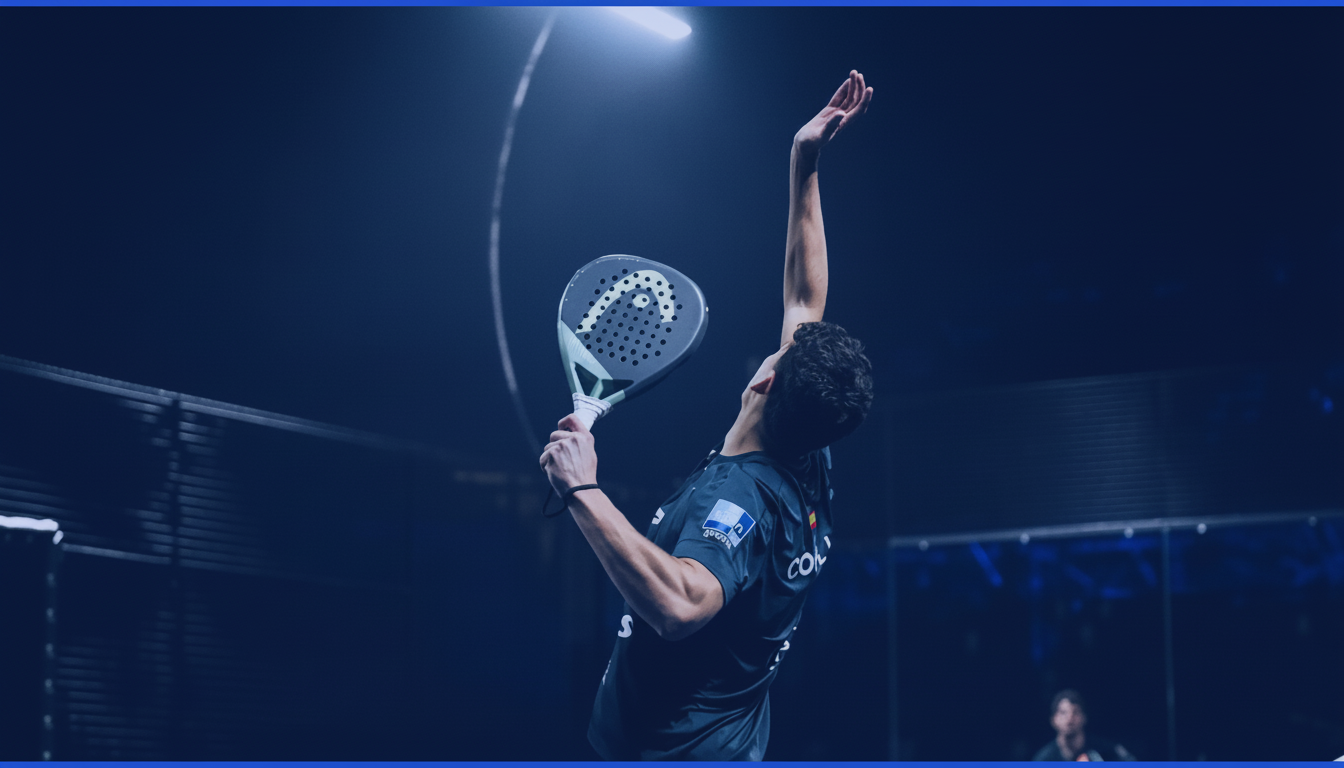
The smash (remate) is the ultimate offensive shot. A powerful overhead strike, it aims to finish the point.
In padel, the smash comes in several spectacular variations:
- Flat smash: maximum power, direct trajectory
- Spin smash: unpredictable bounces off the walls
- Par 3: a smash so powerful that the ball bounces in the opponent’s court and flies out over the side fence (3 meters high). Automatic point won.
- Par 4: even more powerful. The ball exits over the back glass (4 meters high). Point won. The most spectacular shot in padel.
Par 3 and par 4: do not force them
These shots require perfect timing and calibrated power. If you chase the par 4 at all costs, you will mostly end up missing your smash. Focus on precision; the spectacular shot will come naturally with practice.
The Drop Shot (Dejada)
The drop shot (dejada, literally “let it fall”) is a touch shot. The ball should die just behind the net, with a slight backspin that prevents it from bouncing.
When to use it: your opponents are pushed back to the baseline after a lob or a series of deep balls. The drop shot catches them off guard.
Common mistakes: attempting a drop shot when the opponent is close to the net, lack of touch.
The Back Wall Return
The back wall return (salida de pared) is the first wall shot you need to learn. The ball bounces on the ground then off the back glass: you must let it come back to you before hitting.
The keyword: patience. Beginners rush every time. Step back, let the ball come to you, then play your shot (usually a lob or a chiquita to reclaim the net).
Common mistake: lunging at the ball instead of waiting for it to come back naturally.
How to Improve These Shots: Play Americano
Knowing the shots is one thing. Practicing them in real match situations is what makes the difference. The problem with always playing with the same partners: you settle into habits and stop improving.
The Americano format solves exactly this problem. Every match, you switch partners and opponents. One match you are at the net with an offensive player who smashes everything, the next with a patient defender who lobs. You face completely different styles at every rotation.
This variety forces you to use all your shots:
- Against a duo that constantly rushes the net, you work on your lobs and chiquitas
- With a partner who stays at the back, you sharpen your volleys and your bandeja
- Facing big hitters, you improve your reading of back wall returns and your contrapared reflexes
Americano Padel Manager makes organizing effortless: enter the number of players and courts, and the app automatically generates all rotations with a live leaderboard. In under 2 minutes, your training session is up and running. It is the ideal format for improving, whether you are 4 friends or 20 at a club.
Advanced Shots
These shots separate intermediate players from advanced ones. They require time and a lot of repetition.
The Bandeja: Padel’s Signature Shot
The bandeja is THE iconic shot of padel. No other racket sport uses it. Its name comes from the Spanish word for “tray”: the motion resembles carrying a waiter’s tray.
When to use it: you are at the net and your opponent lobs you. Rather than retreating or attempting a risky smash, you play a bandeja to hold your position.
Essential technique:
- Sideways stance
- Arm nearly extended, contact at head height
- Horizontal motion, short swing
- Pronounced slice effect
- The goal is NOT to win the point but to keep the net
The ball travels deep with a very low bounce after hitting the wall. The opponent is forced to lob again, and you maintain control.
Common mistake: trying to finish the point instead of controlling. The bandeja is a shot of patience.
The Vibora: The Offensive Version
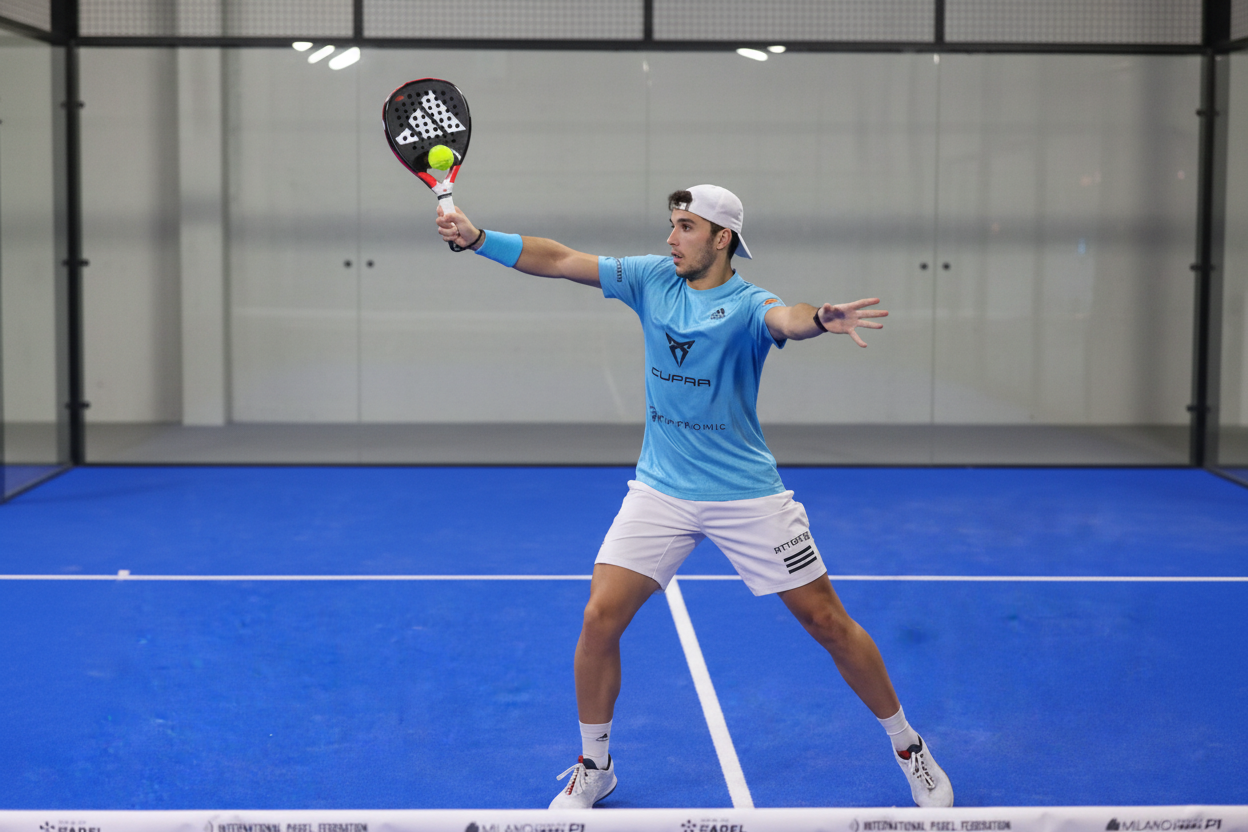
The vibora (viper in Spanish) is the bandeja’s aggressive big sister. Same starting situation, but when the lob is shorter and you have time to position yourself.
The differences from the bandeja:
- More bent elbow
- Contact point higher and slightly further back
- Much more aggressive and vertical motion
- Very pronounced sidespin
- Full follow-through wrapping behind the neck
The ball deviates unpredictably after bouncing off the wall. This “snake” effect is what gives the shot its name.
Bandeja or vibora: how to choose?
The rule is simple. Well positioned with time? Vibora. Late or poorly placed? Bandeja. Choose based on your actual position, not your ego.
The Chiquita
The chiquita is the smart alternative to the lob. Instead of sending the ball high, you slide it just over the net, at the opponent’s feet.
Technique: very little power, almost “pushing” the ball with a slight slice. The ball should arrive low and slow at the volleyer’s feet, forcing a difficult low volley.
The tactical goal: neutralize the duo at the net and take back the initiative. If the chiquita is well placed, the opponent can only return a weak ball that you can attack.
Common mistakes: too much speed (easy to handle) or too high (gets smashed).
The Bajada de Pared
The bajada de pared (wall descent) turns a defensive position into an attack. Your opponent lobs you, the ball bounces off the back glass: instead of passively letting it come back, you accelerate it by hitting hard as it comes down.
The motion is similar to a smash, but executed near the back wall. It requires exceptional timing and excellent positioning.
Common mistake: bad timing. Hitting too early or too late makes the shot ineffective or even dangerous.
The Gancho
The gancho (hook) is an intermediate shot between the bandeja and the smash. It is used when the ball arrives above your opposite shoulder (left shoulder for a right-hander).
Technique: arm extended, contact directly above the head, hook-shaped motion. Unlike the bandeja, there is no spin: it is a penetrating shot.
Difficulty: advanced. Positioning under the ball is the key.
Wall Play: Contrapared and Double Wall
Wall play is what sets padel apart from every other racket sport. These two shots are essential defensive weapons.
The Contrapared (Counter-Wall)
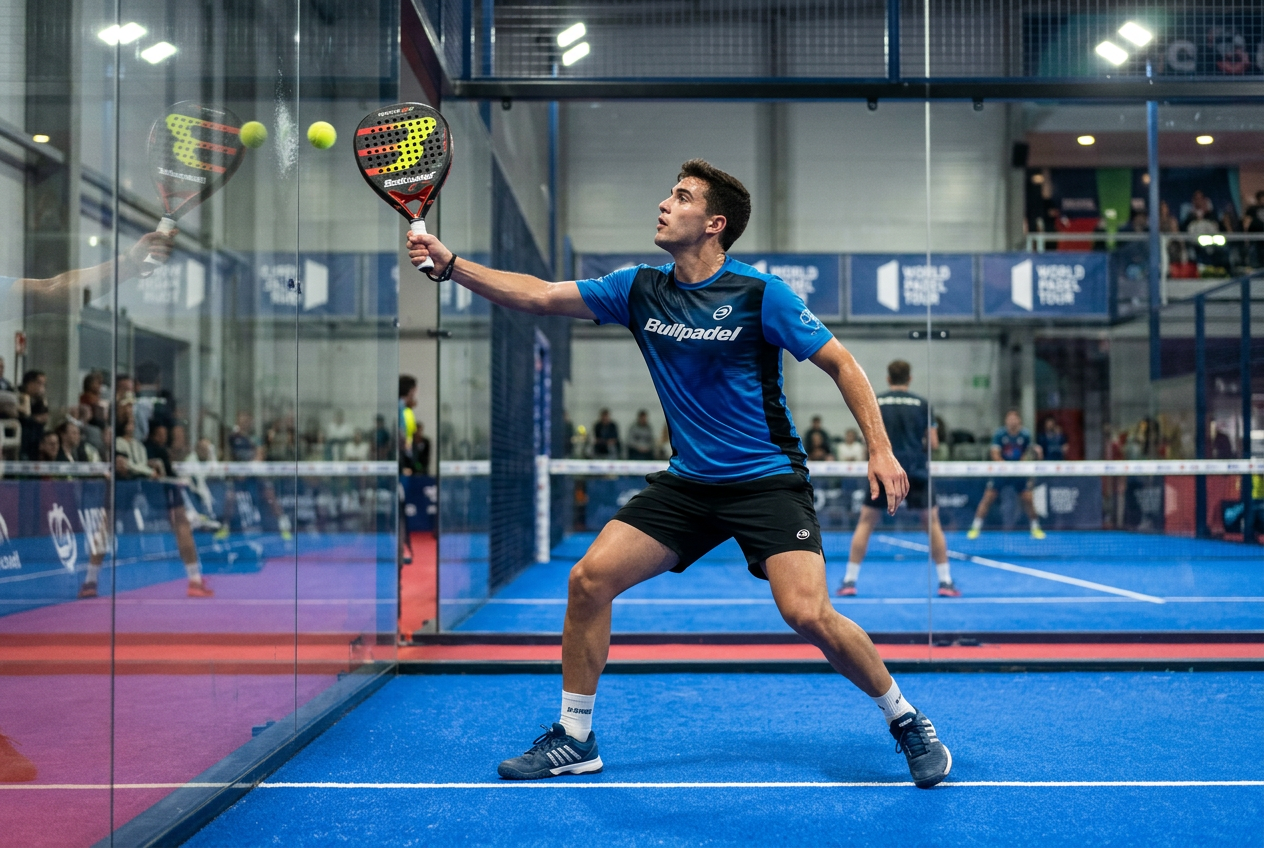
The contrapared is the shot of last resort. With your back to your own wall, you hit the glass on your side to send the ball back over the net.
How it works:
- Let the ball pass in front of you
- Hit the back glass on your own side
- Open racket face, contact in the upper zone of the glass
- The ball produces a lob that crosses back over to the other side
There are two variations:
- Lob contrapared: the most common, high trajectory, recommended for beginners
- Flat contrapared: low trajectory, reserved for advanced players with full control
Watch the contact zone
If you hit too low on the glass, the ball comes back at you instead of clearing the net. Always aim for the upper part of the wall.
The Double Wall
The double wall (doble pared) occurs when the ball bounces off both corner walls: back glass then side glass, or the reverse.
- Open double wall: the ball hits the side glass then the back glass
- Closed double wall: the ball hits the back glass then the side glass
The key: step back to the corner where the two walls meet, wait for the ball to hit both walls, then move forward to play. Most players do not step back far enough and get caught out of position.
Spectacular Shots (Expert Level)
These shots are not essential, but they are what make professional padel so beautiful. And sometimes, they save a point that seemed lost.
The Rulo
The rulo is a brushed smash aimed diagonally at the opponent’s side fence. The ball passes over the opponents, bounces high, then falls back on your side of the court. The point is won because the ball never returns to the opponent’s side.
The key to the rulo: heavy brushing, little power. It is the opposite of a classic smash. Players positioned on the left side (right-handers) or the right side (left-handers) have the most natural position to execute it.
The Dormilona
The dormilona (the sleeper) is a shot that only exists in padel. Popularized by Juan Lebron, it is a drop shot played off an opponent’s smash that has bounced off your back glass.
Instead of lobbing defensively, you play a delicate drop shot that falls just behind the net. The ball “falls asleep” at the net, hence the name. It is the ultimate counter-attack: turning your opponent’s smash into a point for you.
The Gran Willy
The Gran Willy (named after Guillermo Vilas) is the spectacular survival shot: the ball has gone past you, no normal shot is possible, so you hit between your legs with your back to the net.
It is the shot of last hope. When it works, it is magical. When it misses, the point is lost. But on a padel court, the walls sometimes produce such unpredictable bounces that it becomes the only option.
Complete Summary Table of All Padel Shots
| Shot | Spanish Name | Court Zone | Intent | Level |
|---|---|---|---|---|
| Forehand | Derecha | Anywhere | Versatile | Beginner |
| Backhand | Revés | Anywhere | Versatile | Beginner |
| Serve | Saque | Service line | Offensive | Beginner |
| Volley | Volea | Net | Offensive/Defensive | Beginner |
| Lob | Globo | Baseline | Strategic | Beginner |
| Smash | Remate | Net | Offensive | Intermediate |
| Drop Shot | Dejada | Net/Mid-court | Tactical | Intermediate |
| Back Wall Return | Salida de pared | Baseline | Defensive | Intermediate |
| Bandeja | Bandeja | Net | Transition | Advanced |
| Vibora | Víbora | Net | Offensive | Advanced |
| Chiquita | Chiquita | Baseline/Mid-court | Tactical | Advanced |
| Bajada | Bajada de pared | Baseline | Counter-attack | Advanced |
| Gancho | Gancho | Net | Transition | Advanced |
| Contrapared | Contrapared | Baseline | Defensive | Advanced |
| Double Wall | Doble pared | Baseline | Defensive | Advanced |
| Feint | Finta | Net | Tactical | Advanced |
| Rulo | Rulo | Net | Offensive | Expert |
| Dormilona | Dormilona | Baseline | Counter-attack | Expert |
| Par 3 / Par 4 | X3 / X4 | Net | Offensive | Expert |
| Gran Willy | Gran Willy | Baseline | Last resort | Expert |
Which Shots Should You Learn First?
If you are a beginner, focus on 5 shots in this order of priority:
- The lob: it structures the entire game. A player who lobs well gives any opponent a tough time.
- The volley: padel is won at the net. Mastering the block volley and the attacking volley is essential.
- The serve + net approach: serve and come forward, every single time.
- The back wall return: learn patience, let the ball come back.
- The forehand and backhand: paradoxically, they come last. Most players already have these as a reflex.
Once these fundamentals are solid, move on to the bandeja and the chiquita: these are the two shots that transform an intermediate player into an advanced one.
FAQ
What is the most important shot in padel?
The lob is unanimously considered the most important shot. It structures the entire game: the lob is how you reclaim the net, push opponents back, and build your points. A player who masters the lob compensates for many other technical weaknesses.
What is the difference between bandeja and vibora?
The bandeja is a control shot: short swing, slice effect, with the goal of maintaining your position at the net. The vibora is offensive: more aggressive motion, pronounced sidespin, with the goal of putting pressure on. Choose the bandeja when you are late or poorly positioned, the vibora when you have time and the right position.
How do you hit a par 4 in padel?
The par 4 is an extremely powerful smash where the ball bounces in the opponent’s court and exits over the back glass (4 meters high). It requires perfect timing, an overhead contact point with a steep downward angle, and above all a lot of power. This shot develops with experience and should not be forced.
What is a chiquita in padel?
The chiquita is a low, slow ball that you slide just over the net, at the opponent’s feet. It forces them to play a difficult low volley, which allows you to take back the initiative. It is the tactical alternative to the lob when your opponents are holding the net.
What shots should you learn first in padel?
The 5 priority shots for a beginner are: the lob (the most strategic), the volley (padel is won at the net), the serve with a net approach, the back wall return (managing wall bounces), then the forehand and backhand. Once these fundamentals are solid, learn the bandeja and the chiquita.
Padel is a sport of fascinating technical depth. From the simple forehand to the acrobatics of the Gran Willy, every shot has its role and its moment. The good news: you do not need to master all of them to have fun. Start with the fundamentals, progress at your own pace, and the advanced shots will come naturally with practice. And to put it all into action, nothing beats an Americano tournament with friends: download Americano Padel Manager and launch your first session in 2 minutes.