 Americano Padel Manager
 Winning at padel is above all a question of tactics. The team that controls the net wins between 70 and 80% of points, regardless of technical level. This guide gives you the fundamental principles to take the net, manage your balls, play the right zones and communicate with your partner.
The fundamental principle: why the net decides everything
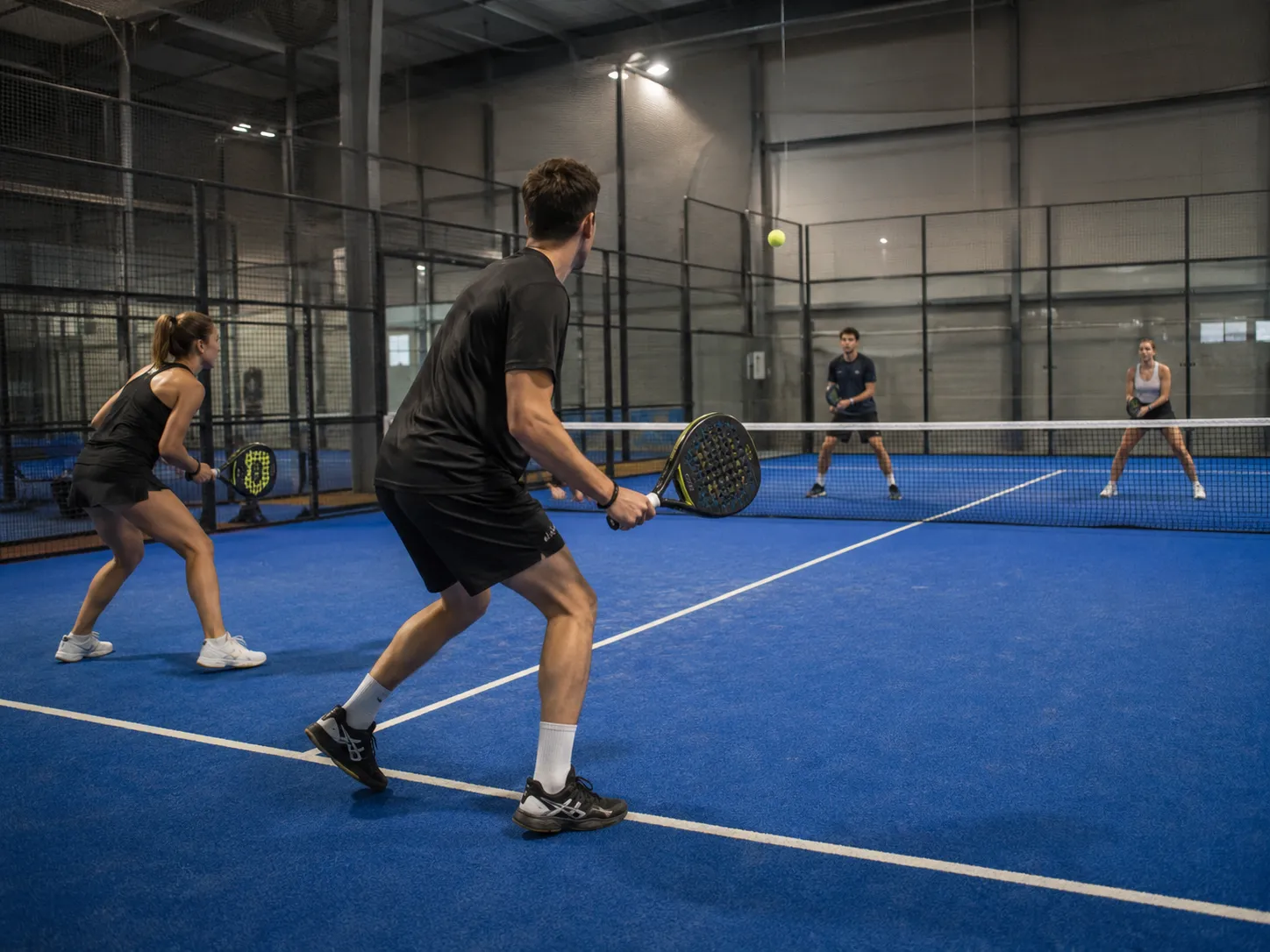
The most important statistic in padel: the team that controls the net wins between 70 and 80% of points. This is not an intuition — it is geometry.
The geometry that explains the figure
When you are at the net, you can place the ball at angles your opponents cannot reach. You shorten their reaction time, you impose your rhythm and you can finish the point at will. Conversely, playing from the baseline means suffering. Every ball you return gives the opposing team time to reposition and counter you.
The net is not a reward for good players. It is the base position to conquer from the very start of the rally.
The golden rule: move up together, move back together
One of the most common traps in intermediate padel: one player moves to the net while their partner stays at the back. This scissor position creates an open diagonal that any halfway-alert opponent will exploit immediately.
The rule is simple: you move together. You move up together after a good lob or an advantageous serve. You move back together when an opponent’s lob passes over you. Think of it as a barrier you form as a pair, not as two independent players.
The 3 ball heights: knowing when to defend and when to attack
This is the most concrete tactical principle in padel. It dictates your shot choice before you have even touched the ball.
Ball below net height: survival mode
When the ball drops below net level before reaching you, your only objective is to return it without making an error. Attempting a winner from this position is giving the point away to your opponent. The appropriate shots are the lob or the low chiquita, with the sole ambition of getting the ball back in play.
Ball between hip and shoulder: building
This is the neutralisation zone. You can apply pressure without trying to finish the point. The bandeja and the construction volley are your tools: they keep the opponent at the back and keep you at the net. Do not force from this zone.
Ball above shoulder height: finish the point
This is the only situation where you have the right to try to score. A decisive smash, an aggressive vibora or a flat shot can close the rally. If you try to finish the point on a ball below shoulder height, you are playing against the odds.
⚠️ The most common mistake
Wanting to finish the point on any ball. Unforced errors are the number one cause of defeat in amateur padel. Respect your three zones and your error rate will drop immediately.
The lob: the most underestimated tactical weapon
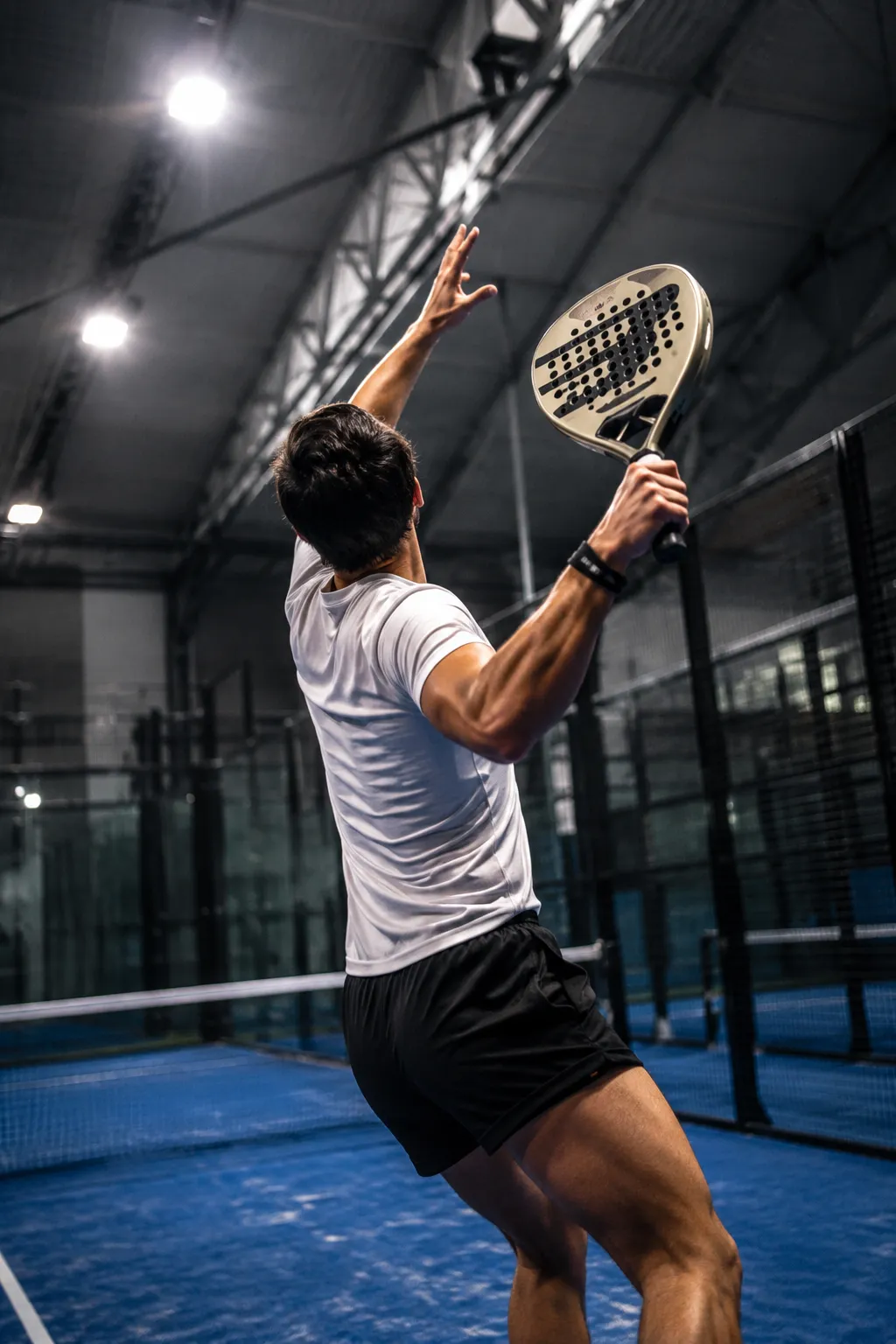
Many players consider the lob a last-resort defensive shot. That is a mistake. The lob is the primary weapon for reversing the balance of power in a rally.
What the lob actually does
A well-placed lob does four things simultaneously: it forces the opposing team to move back, it gives you time to move back up to the net, it forces the opponent to play a bandeja from the back and it breaks the rhythm they had established. A good lob can turn a tactically losing situation around in a single shot.
The best padel players are not those who smash the hardest. They are those who lob with the greatest precision.
Offensive lob vs survival lob
The survival lob is played under pressure, from a low position or off-balance. Its only purpose is to restore tactical equality between both teams.
The offensive lob is played from a stable position, with the height and depth needed so the opponent cannot smash it easily. Aim for the back line, slightly offset to one side. If your lob lands in the last metre of the opponent’s court, you and your partner have time to take the net.
Play zones, not lines
Stop aiming for the lines. In padel, lines create errors. Zones create points.
The centre: the confusion zone
A ball played between the two opponents creates hesitation. “Yours? Mine?” That is a fraction of a second lost, poor communication, often an error or a weak response. The centre of the court is also the zone with the greatest margin for error on your side of the net. Play it regularly.
Into the feet: neutralising volleys
A net player who receives a low ball into their feet is in serious difficulty. The volley has to be played upward, which removes all angle and aggression. Aim for the feet of a net player whenever you can, especially from the back of the court.
The double glass: an impossible bounce to read
The double glass (side glass then back glass) is the most difficult shot to defend in padel. The ball leaves in an unexpected direction, often toward the middle of the court. If you master this placement, you regularly create points without having to hit hard.
Attacking the weak link
Identify which of the two opponents is least comfortable and play on them systematically. Spot the fragile backhand volley, the lob that never goes high enough, the side that causes them problems. Once you have found it, do not let go.
Bandeja or vibora: choosing the right shot at the right time
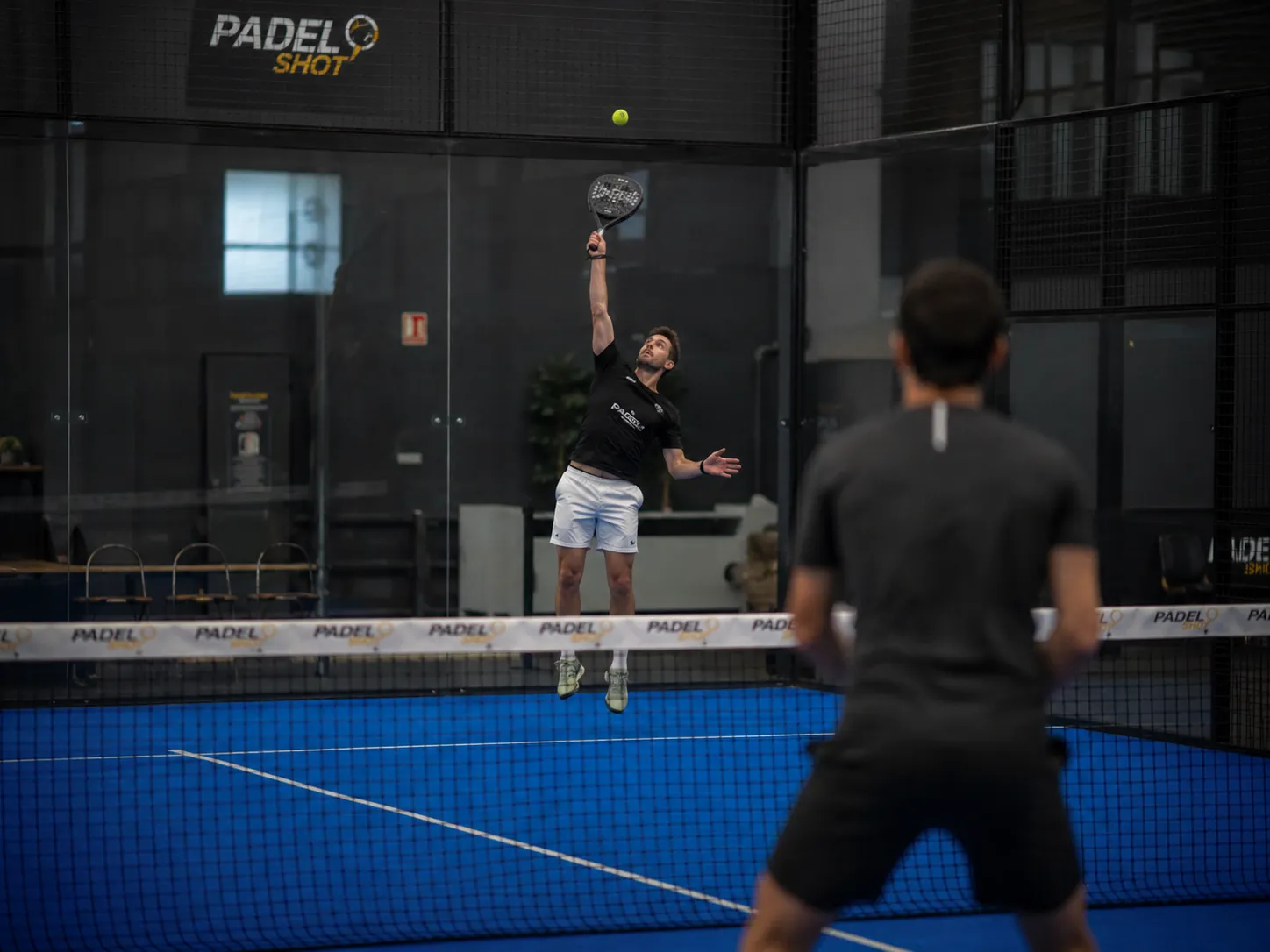
When your opponent lobs you, you mainly have two choices: the bandeja or the vibora. Many players use them interchangeably. That is a tactical mistake.
The bandeja: managing without losing the net
The bandeja is the management shot. Its purpose is not to score but to maintain your net position while sending the ball deep into the opponent’s court. Use it when the lob is too high to smash comfortably, when you are slightly late or when you need time to reposition. A well-executed bandeja maintains pressure without taking risks.
To go further on the technique of these shots, check out our complete guide to padel shots.
The vibora: hitting to finish the point
The vibora is aggressive. It generates lateral spin and sends the ball toward the sides of the opponent’s court at high speed. Use it when the lob is short, when you are well-positioned and when the opponent is already pushed back or in difficulty. A vibora on a ball that is too high risks an error. A vibora on a perfect ball can be unstoppable.
The nevera (the fridge): isolating an opponent
The nevera consists of playing all your shots on just one opponent, completely ignoring the other. The aim is to tire them physically and mentally, to deprive them of rhythm and to create openings through accumulated pressure. It is a formidable tactic at the end of a set or against a team where one player is clearly dominant.
Reclaiming the net when your opponent has taken it
Your opponents have taken the net. What do you do from the back? Three main options, depending on the situation.
The chiquita is a fast, low ball played just after the bounce, aimed at the feet of the net player. It leaves them no time to prepare and forces a defensive volley. It is the counter-attack shot par excellence from the back.
The counter-attack lob: if your opponents are firmly anchored at the net and you have no angle for the chiquita, lob. Force them to move back, take the net yourself and start again. This is often the only solution, and it is a perfectly valid one.
Vary the rhythm: if your opponents are very comfortable with your usual rhythms, change tempo. A slower, high lob can be just as disruptive as a fast shot. Unpredictability is a form of tactics in its own right.
Communication and game reading: the most neglected weapon
A silent team is a team that loses avoidable points. Communication between partners is the least taught and most decisive tactic.
What to say, and when
Talk between points, not during the rally. During the rally, you can use signals (eye contact, head movement, small gesture). Between points is the time to align your tactics: “we play on his backhand volley”, “we lob on the next smash”, “I move up after the serve”. Two seconds of coordination can sometimes be worth an entire game.
Call the balls: a simple “mine” or “yours” avoids the embarrassing situations where neither player hits. These situations happen more often than you might think, even at a good level.
Varying partners to progress faster
Communication becomes a reflex when practised with different partners. Always playing with the same partner builds comfortable habits but holds back tactical progress. When you regularly change partners, you have to adapt, explain your game, understand theirs. You become a better communicator and a better reader of the game.
This is precisely why the Americano format is so effective for improving. With every rotation, you change partners and opponents. You cannot rely on automatisms. You have to read, adapt, communicate.
Americano Padel Manager is the app that manages these rotations automatically. In a matter of seconds, it generates matches, ensures a fair distribution of partners for 4 to 40 players, tracks the standings in real time and works even without an internet connection. Organising an Americano session with 8, 12 or 20 players takes less than two minutes. What matters is playing, not drawing up tables by hand.
To avoid classic pitfalls before you have even developed your tactical automatisms, take a look at our article on classic padel beginner mistakes.
Frequently asked questions about padel tactics
What is the most important tactic to learn in padel?
Taking and holding the net. The team that controls the net zone wins between 70 and 80% of points. Everything else in tactics flows from this principle: the lob, the chiquita, the bandeja all serve to conquer or defend the net.
How do I stop making unforced errors in padel?
Respect the 3 ball height rule. A ball below net level calls for a defensive shot (lob, chiquita). A ball between hip and shoulder calls for a construction shot (bandeja, neutral volley). Only a ball above shoulder height justifies attempting to finish the point. Most unforced errors come from an aggressive attempt on a ball that did not allow for it.
When should I use the bandeja instead of the vibora?
The bandeja is the right choice when you are late, when the lob is high or when your priority is to stay at the net without taking risks. The vibora is made for short balls, when you are well-positioned and the opponent is already pushed back or in difficulty. The bandeja manages the point, the vibora ends it.
Is the lob really an offensive shot?
Yes, in the right situation. A deep, precise lob forces your opponent to move back, gives you time to take the net and breaks their rhythm. The survival lob is defensive. The offensive lob, played from a stable position with the right height and depth, is a point-building weapon in its own right.
How do I improve communication with my padel partner?
Talk between points, call the balls (mine/yours) and align your tactics in two seconds before each game. Regularly varying your partner is one of the most effective ways to develop your adaptability and communication. The Americano format is ideal for this: you change partner with every rotation, which forces you to adapt constantly.
Conclusion: tactics are trained as much as technique
Technique gives you the shots. Tactics give you the matches. Apply the net principle, respect your three ball zones, lob more than you do today, play the smart zones and communicate with your partner. Each of these habits can be enough to change the outcome of a match.
Download Americano Padel Manager for free and organise your next Americano session in under two minutes. It is the most effective tactical training ground there is.