 Americano Padel Manager
 The padel fridge tactic (nevera): complete guide to using it and defending against it
The fridge tactic in padel consists of deliberately not playing any balls to one of the two opponents in order to isolate them from the game. Known as nevera in Spanish, which literally means “refrigerator”, this strategy aims to break the rhythm, confidence and cohesion of the opposing pair. When used correctly, it is one of the most formidable tactical weapons in padel.
But the fridge is a double-edged sword. Poorly executed, it can backfire: you become predictable, you force shots, and you hand rhythm to the very player you wanted to weaken. This guide explains how to apply it correctly, when to abandon it, and how to escape it if you are the victim.
What is the fridge tactic (nevera) in padel?
The term comes from the Spanish nevera, which literally means “refrigerator”. The image is clear: a player who receives no balls gradually “cools down”, loses their feel, their footwork, and eventually drifts out of the match mentally.
The principle is simple: direct the vast majority of rallies towards one of the two opponents, deliberately ignoring the other. This “frozen” player becomes a spectator. They stop touching the ball, their reflexes slow down, and they start to doubt.
What makes this tactic particularly effective is its psychological dimension as much as its technical one. Research on sports performance shows that a player deprived of balls sees their anxiety level rise rapidly. They lose their bearings, tighten up, and when a ball finally arrives, they tend to over-play it. The error almost always follows.
On the other side, the player receiving all the balls faces growing pressure: they know their opponents are deliberately targeting their weaknesses, and this feeling of exposure creates additional tension.
The 3 strategic reasons to use the fridge
You do not apply the fridge at random. This tactic serves specific objectives, and choosing the wrong objective can cost you the match.
Exploit the weakest player
This is the most common use. You have identified that one of the two opponents makes more errors, has a technical weakness (hesitant smash, slow retreat, struggling forehand) or is less mentally solid under pressure.
By playing 70 to 80% of balls to them, you maximise your chances of making them crack. Easy points accumulate and the psychological pressure builds on that player throughout the match.
Freeze the strongest player
This is the most counter-intuitive use, and often the most effective. The opponent is on fire: everything they try works, their confidence is at its peak. Rather than confronting them, you remove them from the game.
Deprived of balls, that player will progressively lose their rhythm. They start to grow impatient, want to intercept balls not meant for them, and drift out of position. In doing so, they unbalance their own pair. Frustrated, they force shots and commit errors that would never have existed if they had continued playing naturally.
Break the pair’s dynamic
Some pairs operate on a well-oiled mechanism: the right-side player builds the point and the left-side player finishes it. If you are not yet clear on the roles of the right-side and left-side player, now is the time to look into it. By freezing one of them, you break that mechanism. You force them to play in a way that is unnatural, to improvise, to ask themselves questions they do not usually ask.
How to apply the fridge: the complete method
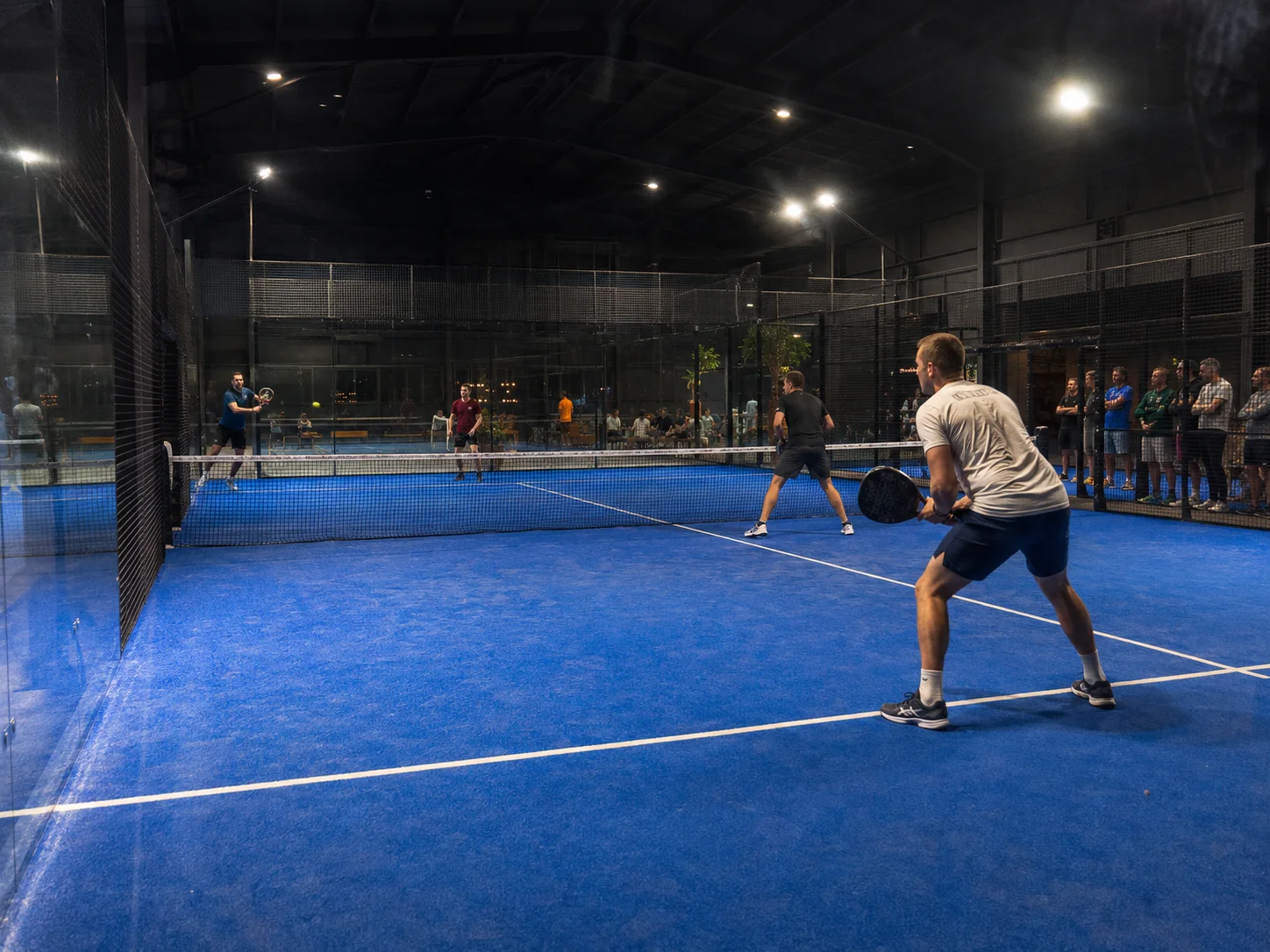
Setting up an effective fridge is not just about “playing to the same player”. It is a strategy that requires discipline, communication and clarity.
The 70/30 rule
This is the fundamental principle that many players forget: never play 100% of balls to the same player.
Constantly targeting the same opponent makes you immediately predictable. The opposing team adapts: the “frozen” player shifts to the centre to cover more court and intercept your balls, while the “targeted” player only needs to defend half the court. Your tactic becomes a gift to them.
The right ratio: 70% of balls to the targeted player, 30% to the other. That 30% keeps both opponents guessing, prevents the frozen player from positioning at the centre, and stops the targeted player from settling into a comfortable rhythm.
The technical tools
The 70/30 rule will only work if you vary your shots. Even when always targeting the same player, you have a full arsenal:
- Diagonal play: your right-side player targets the opposing right-side player, your left-side player targets the opposing left-side player. This is the safest trajectory to control your ball direction.
- The lob: lobbing consistently to the same player is an excellent way to exhaust them physically and put them under mental pressure, especially late in a match.
- The serve: serving all your balls to the same player puts them under pressure from the very first shot. It is a simple lever that is often under-used.
- Varied attacking shots: bandeja, vibora, rulo. Vary speeds and spins so the targeted player can never anticipate. Check our complete guide to padel shots to master each of them.
Communicating with your partner
A fridge that is not set up by both players does not work. Without explicit communication with your partner, you risk playing independently without cohesion, cancelling out the tactic’s effect.
Before the match, or during a side change, discuss it clearly: which player to target, at what ratio, and in which situations to aim for the centre or the “strong” player. This brief conversation makes all the difference between a laboured fridge and one that truly destabilises.
Attack towards the “strong” player when finishing
This is a detail few players know, but its psychological impact is considerable. When you have a high ball to finish the point, direct it towards the “strong” player, the one you deliberately ignored throughout the rally.
The effect is devastating: that player barely touches the ball, and the rare balls that do arrive are the most difficult, the most powerful. They cannot find rhythm, cannot “enter the match” through easy shots. Their frustration accumulates and their risk-taking increases.
Know when to abandon the strategy
A good player knows when a tactic is not working. If after several games the targeted player is holding their own without difficulty and the frozen player is starting to intercept effectively, continuing to force the fridge becomes counter-productive.
Change approach: alternate targets, play more through the centre, or try targeting the other opponent. Tactical awareness is a skill in its own right in padel.
The 3 traps of the fridge
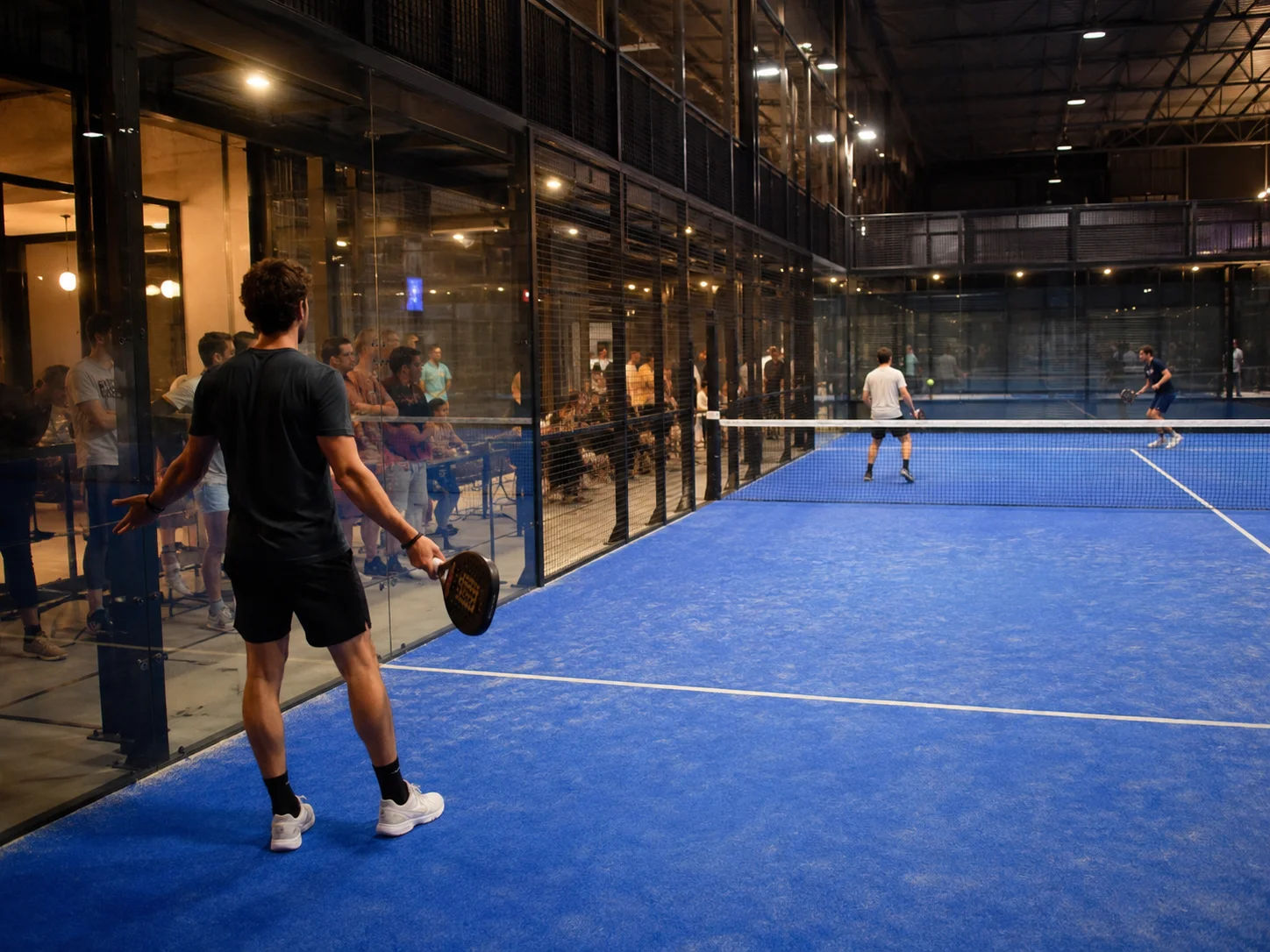
Even well-intentioned, the fridge can backfire. Here are the most common errors.
Becoming predictable. This is trap number one. By repeatedly playing to the same opponent, you give the opposing team valuable information: they know exactly where the ball is going. The frozen player repositions at the centre, covers central trajectories, and the targeted player only needs to defend their half of the court. The fridge has made you predictable, and predictability in padel is a major weakness.
Forcing and multiplying errors. By trying at all costs to play to a specific zone of the court, you take less margin on your shots. You attempt angles you would not normally play, you accelerate balls that do not lend themselves to acceleration. The result: direct errors that hand free points to your opponents.
Over-playing the weak player, who ends up finding their rhythm. This is the cruel paradox of a poorly dosed fridge: by receiving all the balls, the “weak” player eventually enters the match. They gain confidence, their strokes become more fluid, and the pressure you hoped to create has turned into a training session for them. If you sense they are improving, change target immediately.
How to escape the fridge: 5 counter-tactics

If you are the victim of a fridge, passivity is your worst enemy. Every rally without touching the ball reinforces the psychological disadvantage. Here is how to regain control.
For the frozen player: the 3/5 rule
Do not stay in your lane. Progressively shift towards the centre of the court, covering roughly 3/5 of the total width. This position allows you to intercept balls passing through the middle, re-enter the rally and force your opponents to recalculate their trajectories.
Also communicate with your partner: ask them not to hesitate to play into your zone when the opportunity arises, to give you back some rhythm.
For the targeted player: patience above all
Your instinct will push you to want to “finish” the point with a winner. Resist that temptation. Your opponents are waiting exactly for that error.
Your only goal is to sustain the rally and not make the error. Play through the centre as much as possible: that direction forces your opponents to choose their side and naturally creates opportunities for your partner to touch the ball.
The Australian formation
Switch sides with your partner for a point or two. This “Australian formation” immediately disrupts your opponents’ routine: their usual trajectories no longer match the correct targets, they need to recalibrate mentally, and that recalibration phase creates hesitation, and therefore errors.
Parallel play
Suggest to your partner to target the same opposing player, but by playing in parallel rather than diagonally. Parallel play offers less space and is harder to defend. The targeted player is forced to play diagonally to secure the rally, which naturally allows the “frozen” player to recover balls and exit the fridge.
Change the overall strategy
Sometimes the best exit from the fridge is to completely change the match’s rhythm: slow down with high lobs, suddenly accelerate, take the net unexpectedly. The goal is to force your opponents to play differently, which breaks their placement logic and opens new trajectories for both players on your team.
Fridge in competition vs friendly games: the unwritten code
In competition, the fridge tactic is a perfectly legitimate strategy. At every level, from local clubs to the professional circuit, isolating the most vulnerable opponent is part of the normal tactical arsenal. Wanting to win a match by exploiting opponents’ weaknesses is simply playing padel.
In a friendly game among friends, it is a different story. Systematically fridging someone during a relaxed session breaks the implicit social contract of those moments: everyone is there to enjoy themselves, touch balls, improve and have a good time. A player completely frozen for 45 minutes is not having fun. They are not improving. And they may not come back next time.
Using elements of the fridge occasionally to work on your tactics in a friendly game is entirely reasonable. But applying it systematically and deliberately, in a context where the only stake is having fun together, is sacrificing the group atmosphere for an advantage that is worth nothing outside competition.
Before even thinking about tactics, a good warm-up routine before the match will put you in the best conditions to execute your game with clarity.
If it is the convivial spirit that motivates you (playing together, rotating partners, everyone actively participating), then the Americano format is made for you. In this format, partners change every round and the ranking is individual: impossible to freeze a player over the long term, and everyone touches balls throughout the session.
To organise an Americano session in just a few minutes, Americano Padel Manager automatically handles rotations, the live leaderboard and court assignments. Free to use, used by thousands of clubs in over 75 countries, it works even without an internet connection.
Frequently asked questions
What is the fridge tactic in padel?
The fridge, or nevera in Spanish, is a padel tactic that consists of no longer playing balls to one of the two opponents. The ignored player “cools down”: they lose their feel, their rhythm and their confidence over the course of the rally. It is both a technical strategy and a psychological weapon.
What is the difference between fridge and nevera in padel?
There is no difference: they are two names for the same tactic. “Nevera” is the Spanish term (meaning “refrigerator”), used in Spanish-speaking countries where padel was born. “Fridge” is the English translation used in English-speaking padel communities.
How do you counter the fridge tactic in padel?
For the frozen player: shift towards the centre of the court to cover 3/5 of the width and intercept central balls. For the targeted player: be patient, play through the centre and avoid risky winners. As a team: try the Australian formation (switching sides) or parallel play to disrupt the opponents’ routine.
Is the fridge tactic allowed in padel?
Yes, completely. There is no rule in padel that requires you to play to both opponents in a balanced way. In competition, the fridge is a perfectly legal tactical strategy used at every level. However, using it systematically in friendly games is generally frowned upon as it harms the enjoyment of the opposing team.
How long should you maintain the fridge in a match?
There is no ideal duration. The fridge should be used in specific sequences of the match, not permanently. If after a few games the targeted player is holding their ground and the frozen player starts intercepting effectively, abandon the strategy and vary your game. Insisting on a fridge that is not working makes you predictable and costs you points.
You now master the fridge tactic in all its forms: how to apply it with the 70/30 rule, when to abandon it, and how to escape it if you are the target. For your next Americano sessions, download Americano Padel Manager, the free app that automatically handles rotations, the leaderboard and courts, so you can focus entirely on the game.