 Americano Padel Manager
 Right Side vs Left Side in Padel: Roles, Differences and How to Choose
In padel, each player occupies one side of the court and fulfills a distinct role. The right side player builds the point with patience and precision, while the left side player finishes it with power. Understanding these roles means progressing faster and forming more effective pairs.
Yet many players choose their side out of habit or by chance. The result: unbalanced duos, poorly constructed points and frustration on the court. This guide details the differences between the two positions, the skills required for each and the concrete criteria for choosing the side that matches your profile.
Why Choosing Your Side Matters in Padel
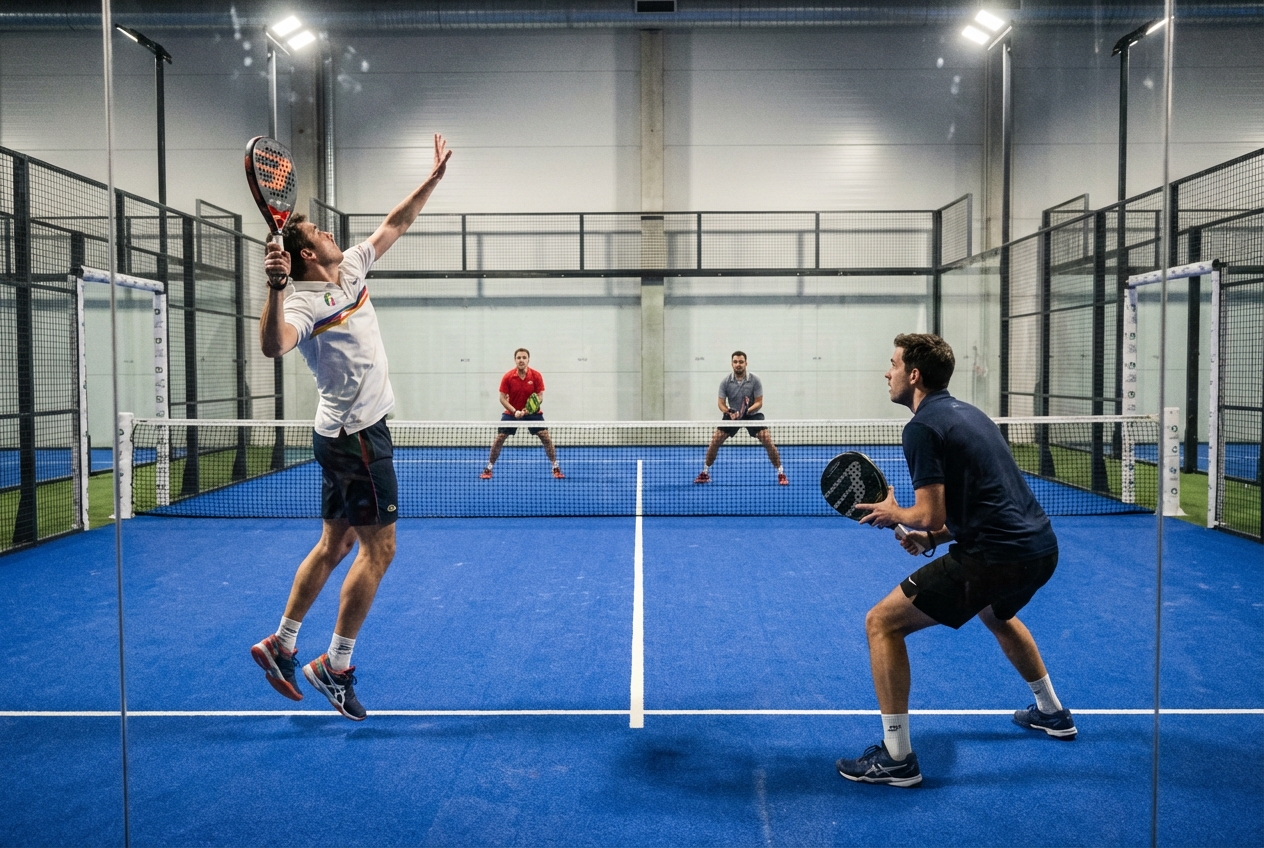
Unlike tennis, padel is played exclusively in doubles. Each player covers half the court for the entire duration of the match. This fixed positioning creates two complementary roles that directly influence the dynamics of play.
70% of balls pass through the center of the court. This statistic explains why the side you choose determines the shots you will play most often. A right-handed player on the left will use their forehand at the center, where most of the game is concentrated. A right-handed player on the right will have to rely on their backhand volley to handle those central balls.
Choosing your side is not trivial. It determines your role in the pair, the shots you will need to master and even the mental pressure you will face during important points.
The Right Side Player: the Architect
The right side player is the strategist of the pair. Their main role is to build the point so their partner can finish it. They are the metronome that sets the pace and creates openings.
Role and Responsibilities
The right side player defends the diagonal against the opposing left side player, who is looking to finish points by crossing. They must absorb the opponent’s power, keep the ball in play and wait for the right moment to create an opportunity.
In practice, their job is to:
- Stabilize rallies with deep, low volleys
- Vary angles to move opponents and open spaces
- Execute precise lobs to regain the net position
- Defend the glass consistently on their side
On a parallel lob, the right side player only needs a 45° rotation to face the ball. This is a considerable technical advantage compared to the left side player who must pivot 120°.
Essential Technical Skills
The backhand volley is the most important shot for a right side player. Since 70% of balls travel through the center, they will need to handle them with the backhand. A reliable, precise backhand volley capable of varying between short and deep volleys makes all the difference.
Other essential shots:
- Bandeja to control tempo on lobs
- Chiquita to regain the net from the back
- Solid glass defense on the right side
- Ability to combine short lateral volleys and deep low volleys
Psychological Profile
The right side player must be patient and disciplined. Accept not finishing points, resist the temptation to force shots and stay calm when opponents apply pressure. It is an unglamorous but essential role.
They must also have good game reading to anticipate tactical patterns and place balls at the right moment. Consistency matters more than power.
The Left Side Player: the Finisher
If the right side player is the architect, the left side player is the attacking weapon of the pair. This is the side of power, aggression and finishing. Their role is to deliver the decisive blow when the opportunity arises.
Role and Responsibilities
The left side player is responsible for finishing points. They receive the majority of lobs (because opponents try to avoid the right side player’s forehand at the center) and must convert them into winners.
Their main responsibilities:
- Smash with power and precision on lobs
- Intercept balls at the center with their forehand
- Move quickly to the net to apply pressure
- Finish points with aggressive volleys and winners
An often overlooked detail: the left side player returns on 6 decisive points per game (30-40, 40-30, deuce advantage side, etc.) compared to only 2 for the right side player. They therefore face additional pressure in key moments.

Essential Technical Skills
Power is the primary quality of the left side player. They must generate speed on their smashes, volleys and groundstrokes to destabilize opponents.
Shots to master:
- Smash powerful and well placed (the signature shot of the left side player)
- Vibora to attack with spin without leaving the court
- Forehand volley aggressive at the center
- Attacking bandeja to maintain pressure on lower lobs
- The full range of essential padel shots
Psychological Profile
The left side player must be decisive, confident and spontaneous. They must accept taking risks and missing shots while going for winners. Hesitation is their worst enemy.
It is a mentally demanding role: when the pair loses points, it is often the left side player who is questioned. They must handle this pressure and keep attacking with conviction.
Key Differences at a Glance
| Criteria | Right Side Player | Left Side Player |
|---|---|---|
| Role | Architect, builder | Finisher, attacker |
| Key shot | Backhand volley | Smash, forehand |
| Rotation on lob | 45° | 120° |
| Decisive return points | 2 per game | 6 per game |
| Main quality | Patience, consistency | Power, decisiveness |
| Profile | Strategist, defender | Aggressive, instinctive |
| Volume of play | Moderate | High |
| Physical effort | More economical | More intense |
Organize Your Matches with Americano Padel Manager
When you play an Americano tournament, you change partners every match. It is the perfect opportunity to test both sides and discover which one suits you best.
Americano Padel Manager simplifies this organization. The app automatically generates player rotations and court assignments, letting you focus on your game rather than logistics. The real-time leaderboard immediately shows you the impact of your positioning on your results.
Whether you are organizing a session with friends or a club tournament with 20 players and multiple courts, APM handles everything: optimal matches, fair rotation and instant results. All in less than 2 minutes of setup and without an internet connection.
Right-Handed, Left-Handed: What Impact on Side Choice?
Handedness is a determining factor in choosing a side, but not in the way most people think.
Two Right-Handed Players Together
This is the most common configuration. The choice is then based on playing profile:
- The more aggressive, powerful and decisive player goes to the left
- The more consistent, patient and strategic player goes to the right
The right-handed left side player uses their forehand at the center of the court (where 70% of balls pass) and their backhand along the glass. The right-handed right side player does the opposite: backhand at the center, forehand along the glass.
Right-Handed and Left-Handed Pair: the Strategic Advantage
A pair made up of a right-handed player on the left and a left-handed player on the right is considered the ideal configuration. The reason is simple: both players have their forehand oriented toward the center of the court.
In practice, this means:
- Forehand volleys at the center for both players
- Forehand smashes on central lobs for both
- Optimal coverage of the most contested zone of the court
- Fewer gaps in central defensive coverage
This is why left-handed players are highly sought after in padel. They bring a natural tactical advantage to their pair by playing on the right.

How to Choose Your Side as a Beginner
If you are a beginner, here is a simple method to find your side:
-
Start on the right. The right side is more accessible for beginners. The game is slower there, the pressure on decisive points is lower and the builder’s role lets you develop consistency without the stress of having to finish points.
-
Try the left side after a few months of practice. Take advantage of Americano sessions where you change partners to experiment with both sides.
-
Evaluate your profile honestly:
- Do you prefer building the point patiently? → Right
- Do you like taking risks and finishing rallies? → Left
- Is your backhand volley your strong point? → Right
- Is your smash your main weapon? → Left
-
Specialize gradually. Once you have identified your side, focus your training on the shots specific to that position. But keep the ability to play on both sides, especially if you participate in Americano tournaments.
Do not forget to prepare physically before each session with a good warm-up routine, whatever side you choose.
Frequently Asked Questions
Can you switch sides during a padel match?
Yes, nothing in the official rules forbids switching sides during a match. Some pairs do it to adapt tactically to the opponent or to surprise them. However, in competition, most pairs keep their positions because they have trained with defined roles.
Which side should a beginner choose in padel?
The right side is recommended for beginners. The game is slower there, the pressure on important points is lower and the builder’s role allows you to develop consistency. Move to the left side once you have mastered the fundamentals and developed your power.
Why do left-handed players always play on the right in padel?
A left-handed player on the right side has their forehand oriented toward the center of the court, where 70% of balls pass. Combined with a right-handed player on the left, this creates a pair where both players cover the center with their forehand, a configuration considered ideal.
Is the left side player necessarily the best in the pair?
No. The left side player has a more visible role because they finish points, but the right side player is equally important. Without a good architect who builds opportunities, the finisher has nothing to finish. The best pairs are those where both roles complement each other perfectly.
In Americano, should you always play on the same side?
In an Americano tournament, you change partners every match, which often means adapting and playing on both sides. It is actually an excellent exercise to develop your versatility. With Americano Padel Manager, rotations are managed automatically so each player faces and plays with everyone.
Ready to test your positioning in your next tournament? Download Americano Padel Manager for free on iOS and Android, create a tournament in less than 2 minutes and discover which side suits you best. With automatic partner rotation, every match is a new opportunity to experiment.