 Americano Padel Manager
 Left-handed padel player: the strategic advantage every competitor must understand
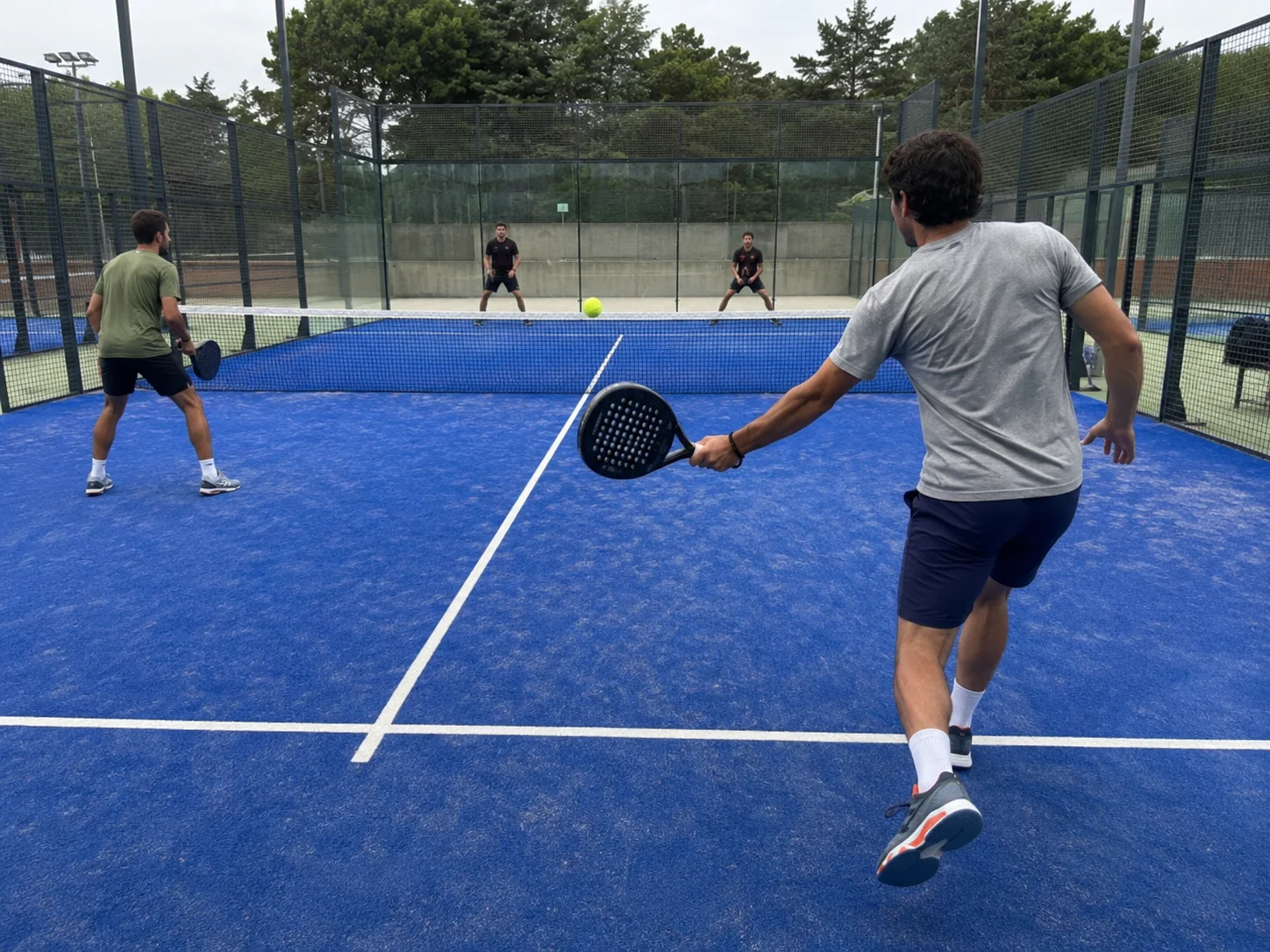
A left-handed padel player benefits from a structural advantage that goes beyond simple positioning. Thanks to the geometry of the court, their strong hand naturally ends up in the center, where 70% of points are decided. A scientific study published in the journal Motricidade confirms it: for 15 years, world rankings have been dominated by right-left pairs. This is no coincidence.
A rare profile, but a dominance that has lasted 15 years
In the general population, around 10 to 12% of people are left-handed. That is a small minority. Yet in the men’s Top 100 of the professional circuit, this figure climbs to 17%. Among women, it reaches 9%. And if we look at all racket sports combined, more than 25% of professional athletes are left-handed.
Padel does not merely welcome left-handers. It over-selects them.
The reason? The scientific journal Motricidade (2018) measured it on professional players: left-handers score 63.3% of their points on the smash, compared to only 40.7% for right-handers. Their ability to finish points from a position of strength is objectively superior. The same study notes that the best pairs in the world have been made up of one right-hander and one left-hander for at least 15 consecutive years.
This is not a tactical trend. It is a law of padel.
The geometry that creates the structural advantage
To understand why the left-hander is so valuable, you need to look at the court differently.
A padel court is 10 meters wide. The central zone, which separates the two players, concentrates 70% of rallies. That is where the decisive shots happen: attacking volleys, interceptions, smashs from the middle.
In a pair made up of two right-handers, the player on the right has their backhand facing the center. Their offensive coverage of that corridor is limited. The player on the left has their forehand at the center and naturally makes the decisions.
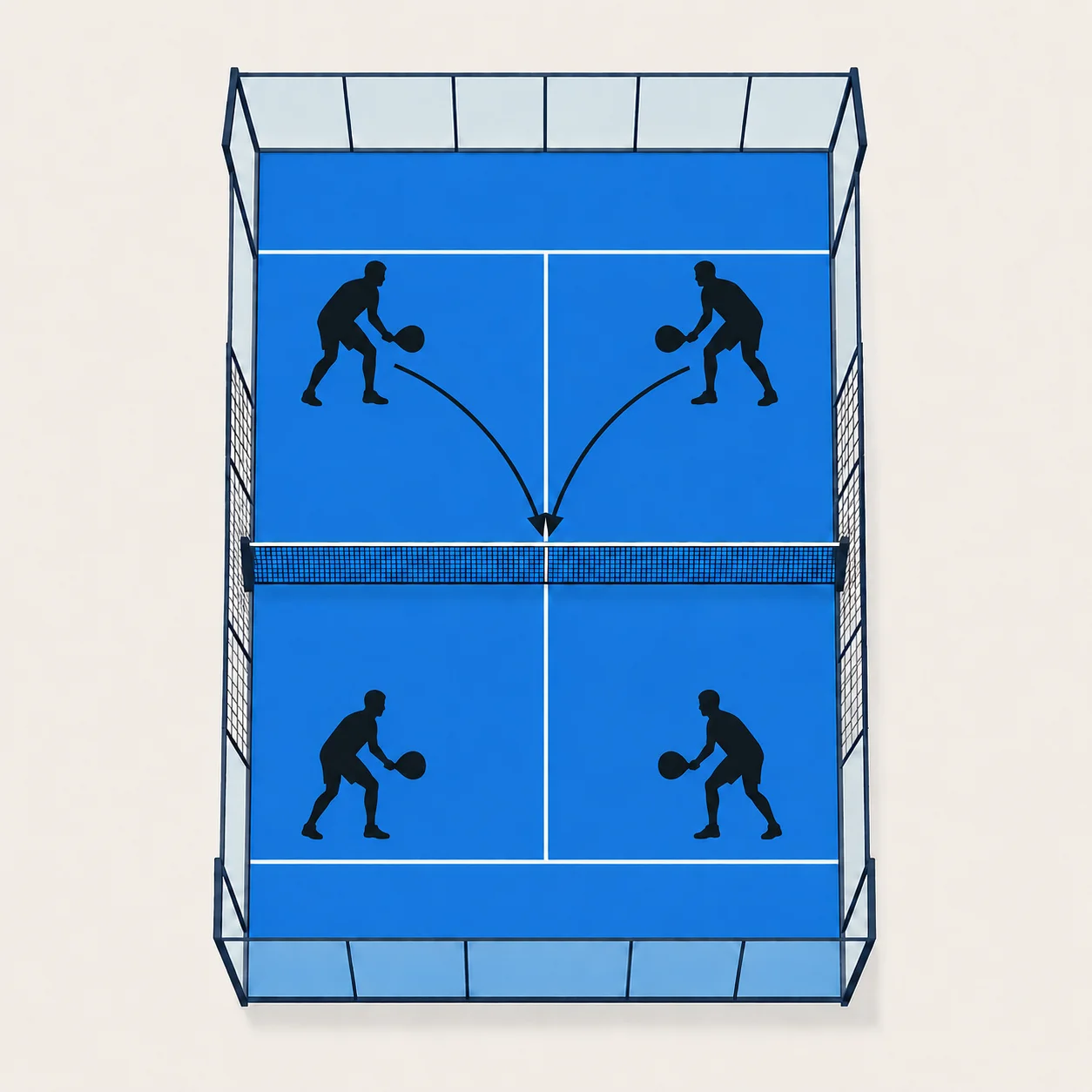
When a left-hander plays on the right side, the configuration changes radically. Both players have their forehand pointing toward the central corridor. Two offensive weapons on the most-played ball in the match. It is a forehand wall that works just as well in attack as in defense.
The left-handed player on the right can then take on a finishing role from their side, a role traditionally reserved for the player on the left. The team thus has two offensive anchor points instead of one. To learn more about the dynamic between the two sides of the court, check our guide on the role of the right-side and left-side padel player.
The cognitive load: what the left-hander does to your brain
This is the least discussed dimension, yet one of the most decisive.
The vast majority of padel players train almost exclusively against right-handers. Their brain has built precise automatisms: reading the spin of a vibora, anticipating a smash coming off the glass, playing crosscourt safely. These reflexes are effective. Against a right-hander.
Against a left-hander, everything is reversed. The vibora goes in the other direction. The serve comes out from the other side. Ball effects bounce against the grain of all established habits. And then something happens that many underestimate: opponents start to think while playing. They consciously remind themselves not to go crosscourt, to re-read the spin before striking, to adjust their return angle.
Playing in conscious mode is slower and more mentally costly than playing on autopilot. Over an entire match, this cognitive overload erodes concentration and accelerates decision fatigue.
⚠️ The most common mistake against a left-hander
Playing the natural crosscourt. That reflex was built against right-handers, and it is exactly what the left-hander is waiting for. The crosscourt sends the ball straight to their forehand, their best weapon.
In Americano, the left-hander will cross your path
In an Americano format tournament, partners change every round. You do not choose who you play with, or against.
This means concretely: you will find yourself playing with the left-hander during one round, then potentially against them in the next. Two situations, two different adjustments, two ways of reading the same player.
Players who have already worked on both configurations arrive on court with a head start. They do not need the first exchange to understand what is happening. They are already calibrated.
Americano Padel Manager handles draws, rotations, and scoring automatically, regardless of the number of players or courts. You can focus all your attention on the game rather than on the logistics of the tournament. If there is a left-hander in your session, all you have to do is play.
The five shots that make them unique
Beyond positioning, the left-hander has a technical repertoire that unsettles opponents used to playing against right-handers. For a complete overview of all padel shots, our padel shots complete guide covers each one in detail.
The zurdo vibora
This is the left-hander’s signature weapon on the right side. The vibora de zurdo imparts a reversed lateral spin compared to that of a right-hander. The ball exits the side glass with a low, skidding bounce toward the fence, a trajectory that opponents trained against right-handers cannot instinctively read.
To execute it, the left-hander pivots sideways toward the right side glass, prepares the paddle behind the head, and unwinds the shoulder while brushing the outer side of the ball. The follow-through wraps around the neck like a scarf. The faster the wrap, the sharper the spin.
The reverse bandeja
The bandeja of the left-hander on the right side is a net-holding weapon. When the opponent lobs, the left-hander can retreat and play a bandeja toward the left back glass, an angle the right-handed player on the right cannot produce naturally.
It is played facing the glass, elbow bent at 90 degrees, brushed contact with a slowing effect. The goal is not to win the point directly, but to stay at the net and force the opponent to play again from the back. To be effective, it must come out low and tight off the back glass.
The smash por 3 and por 4
This is where the numbers speak loudest. From the right side, the left-hander can fire smashs por 3 (bouncing before the side fence) or por 4 (into the back of the court) with their forehand, an option the right-handed player on the right does not have at that level of effectiveness.
Opponents are forced to watch for the smash threat even when the left-hander is in a theoretically defensive position. This permanent uncertainty creates hesitations and positioning errors.
The bajada de pared
When the opponent’s lob is short and bounces high off the back glass, the left-hander can play an offensive bajada de pared from their forehand. It is a top-down shot, played in line with the bounce, to take back the initiative without retreating further.
Well executed, this bajada returns the team to a net position in a single shot. It forces opponents to reposition and erases the advantage they thought they had gained with their lob.
The outside serve
The left-hander’s serve from the right side is rarely practiced specifically by opponents. The outside angle targets the opponent’s corner by coming out toward the right fence, against the grain of habits built against right-handers.
This serve does not win the point outright, but it forces a defensive return, creates an immediate opening, and puts the opposing pair in a reactive posture from the very first exchange.
Arturo Coello, Paula Josemaría, Jon Sanz: what the best left-handers have in common
Examples at the top of the world game illustrate better than any theory.
Arturo Coello is left-handed, plays on the right side, and became the youngest world number 1 in history at the age of 21. His net game is a permanent pressure: he moves in two steps on high balls, plays deep attacking volleys with his dominant forehand, and covers the central corridor with an aggressiveness that opponents describe as suffocating.
Paula Josemaría is the best left-handed female player in the world. Her style follows the same logic: powerful smash and bandeja from the right side, quick net approach, attacking shots taken early in the trajectory. She turns defensive situations into offensive opportunities at a speed her opponents struggle to anticipate.
Jon Sanz, a player from Pamplona born in 2000, won the Barcelona Master Final alongside Coki Nieto. An explosive left-hander, he combines fast net approaches with parallel viboras that force opponents into impossible positions. His ability to convert a short lob into a winning smash from the right side is one of the most feared on the circuit.
What these three players have in common: they do not merely rely on the structural advantage their left hand gives them. They build an entire game around it.
Playing against the asymmetric pair: mistakes to avoid

Facing a pair with a left-hander requires breaking several automatisms. The general tactics in padel are described in our padel tactics complete strategy guide, but here are the specific adjustments.
Playing down the middle. This is mistake number one. A ball in the center exposes both forehands at the same time. You are offering the opponent exactly what they want. The rule here is the opposite: favor the sides, especially slow, low balls to the left-hander’s backhand.
Reading effects as if facing a right-hander. The zurdo vibora exits the glass in the opposite direction from what your reflex anticipates. If you do not actively remember this, your return will be too short or too long. You need to mentally reverse your frame of reference before every high ball from the left-hander.
Ignoring the serve. The left-hander’s outside serve comes out at an unusual angle. Prepare your return toward the right fence, not toward the center as you would against a right-hander.
Lobbing short toward the left-hander. A short lob on the left-hander on the right side gives them access to their smash or offensive bajada from their dominant forehand. If you lob, lob long and deep, aiming at their backhand on the left side.
You are playing with a left-hander tonight: 3 concrete adjustments
Playing with a left-hander is an immediate advantage, provided you do not waste it through lack of communication.
Agree on high balls down the middle. That is the only potential friction point in the pair. Two players with their forehand in the same spot can get in each other’s way. In general, priority goes to whoever has the better smash or the better angle. Decide before the first point, not during it.
Leave them the exits off the right side glass. That is their natural zone. A ball coming off the right glass toward their forehand is their ideal target. The right-handed player on the left must resist the urge to intercept and stay in their corridor.
Work the triangles opened by their vibora. When the zurdo vibora pushes the ball toward the opponent’s fence, it opens a parallel corridor on the left side of the court. That is often where the finishing ball is created for the right-hander. Anticipate that space before the vibora is even struck.
✓ The ideal right-left pair
It works when the left-hander takes ownership of decisions on high balls and finishing shots on the right side, and the right-hander builds the point and exploits the spaces opened by their partner’s shots. A clear division of roles is always better than constant improvisation.
Frequently asked questions about the left-handed padel player
Why are left-handers at an advantage in padel?
Because the geometry of the court favors their natural positioning. Played on the right side, the left-hander places their forehand at the center of the court, where 70% of rallies take place. They can attack, smash, and finish points from this position, a role normally reserved for the player on the left side. In a pair with a right-hander, both forehands converge toward the same central corridor, creating an offensive wall that is difficult to break through.
Which side of the court does a left-hander play in padel?
A left-hander ideally plays on the right side of the court. This is the configuration that lets them use their forehand on central and high balls, the most decisive ones in the game. On the left side, they would be forced to use their backhand on those same balls, losing most of their offensive advantage.
Are there really more left-handers among professional padel players?
Yes. In the general population, 10 to 12% of people are left-handed. In the men’s Top 100 of the professional circuit, that figure rises to 17%. In professional racket sports in general, it exceeds 25%. This overrepresentation is explained by the structural advantage padel offers left-handers and by the difficulty opponents face in adapting to reversed trajectories.
How do you counter a left-handed padel player?
The priority is never to play down the middle: that is handing the ball to their forehand. Target their backhand, especially with deep crosscourt lobs toward the left corner. Mentally anticipate the reversed effects of their vibora before they strike. And aim at their backhand on low balls, the only ones they cannot turn into an offensive threat.
Can a left-hander play on the left side in padel?
Technically yes, but they lose most of their advantage. On the left side, their forehand is used on back balls and glass exits from the left corner, not on the decisive central corridor. Their backhand ends up facing the center, just like a right-hander on the right side. This configuration neutralizes what makes them strong. Except in exceptional pair situations, a left-hander almost always benefits from playing on the right side.
The left-hander: an advantage that is built from both sides
The left-handed padel player is not a quirk of nature in a sport designed for right-handers. They are the product of a mechanism that padel rewards more than any other racket sport. The geometry of the court, the physics of the zurdo vibora, the cognitive load imposed on opponents, everything accumulates in their favor.
But this advantage does not exploit itself alone. It is built with a partner, and it is neutralized with preparation. Players who understand both sides of this equation, playing with a left-hander and facing a left-hander, progress faster and lose fewer matches than they should have won.
In Americano format, where partners change every round, this double reading is not a luxury. It is a basic skill.
Try Americano Padel Manager for free to organize your next Americano or Mexicano tournament. The app handles rotations, scoring, and results in real time, across any number of courts or players.