 Americano Padel Manager
 How to serve in padel: official rules, techniques and tips
The padel serve is hit underhand, after a bounce on the ground, at waist height maximum. Unlike tennis, the goal is not the ace but placement: a good serve opens the door to the net and puts pressure on the opponent from the very first shot. Here is everything you need to know to master the rules and improve technically.
Official padel serve rules (FIP 2026)
The rules of the padel serve are defined by the International Padel Federation (FIP) in articles 6 to 9 of the official regulations, updated on January 1, 2026. They apply at all competition levels, from Premier Padel to friendly tournaments.
Server positioning
The server must stand behind the service line, between the imaginary extension of the centre line and the side wall. The first point of each game is played on the right side (deuce). After each point, the server alternates between the right side and the left side (advantage).
The server may not touch or cross the service line before the strike, nor go beyond the extension of the centre line.
The mandatory bounce before the strike
This is the fundamental difference from tennis: in padel, the ball must bounce on the ground before being hit. It is impossible to toss the ball in the air and strike it directly. The bounce must take place in the server’s service area, behind the line.
Strike below the waist
The ball must be struck at waist level or below (FIP rule, article 6.4). The “waist” is interpreted by the umpire relative to the player’s body. It is not a fixed measurement in centimetres. Striking above the waist constitutes an immediate fault.
Foot faults and feet on the ground
During the serve, at least one foot must remain in contact with the ground at all times. Jumping (both feet off the ground simultaneously) is forbidden. A small step forward is allowed provided the service line is not crossed before contact with the ball.
Two positions are accepted:
- Static serve: feet remain on the ground, a small step forward is possible
- Dynamic serve: the server moves slightly but strikes before crossing the line, one foot always on the ground
Fault, let and double fault
Like tennis, padel grants two serves per point. If the first serve is a fault, the server has a second. Two consecutive faults = double fault = point lost.
What constitutes a fault:
- The ball lands outside the opponent’s service box (diagonally opposite)
- The ball hits the net and does not land in the correct box
- The server strikes above the waist
- Foot fault (foot on the line, both feet off the ground)
- The ball bounces in the box then hits the metal fence before the second bounce
- The server misses the ball while attempting to strike it
- The server exceeds the 25-second time limit between points
When a let is called:
- The ball hits the net but lands in the correct service box
- The receiver was clearly not ready and made no attempt to play the ball
- External interference (ball from a neighbouring court, for example)
An important point: there is no limit to the number of consecutive lets. The belief that a third let becomes a fault is a persistent myth but completely false.
Glass or fence: what is allowed after the bounce
After bouncing in the service box, the ball may hit the back glass and remain playable. The receiver can return it after the bounce off the glass, like any other shot in play.
However, if the ball bounces in the box then hits the metal fence (the mesh section on the sides or above), it is a fault. This glass/fence distinction is specific to the serve and a frequent source of confusion.
Service rotation in doubles
Padel is played exclusively in doubles. The rotation works as follows:
- Before each set, each team decides which player will serve first
- The serve alternates between teams every game
- Within a team, partners alternate: if player A serves in game 1, player B serves in game 3, player A in game 5, etc.
- This order is fixed for the entire set and can only be changed at the start of the next set
- The receiving formation (who receives on the right, who receives on the left) is also fixed for the entire set
Organise your tournaments with Americano Padel Manager
Knowing the serve rules is great. Being able to organise a tournament where everything is managed automatically is even better. Americano Padel Manager generates matches, manages player rotation and calculates the ranking in real time for Americano and Mexicano formats.
The app supports any number of players (from 4 to 40), optimises distribution across multiple courts simultaneously and works even offline. No more Excel spreadsheets or manual calculations: in under 2 minutes, your tournament is ready and every player knows which court to serve on.
Used by thousands of clubs in over 75 countries, rated 4.9/5 on the stores, it is the simplest solution to go from theory (the rules) to practice (the tournament).
The 5 types of padel serve
The padel serve comes in 5 main variations. Each has its strengths depending on the situation and the opponent’s profile.
Flat serve
The simplest and most reliable. The racket strikes the ball face-on, perpendicular to the ground, with minimal spin. The trajectory is direct and low over the net. It is the ideal serve for beginners and an excellent option as a second serve when the priority is getting the ball in play.
Slice serve
The most commonly used serve at all levels. The racket motion goes under and through the ball (from outside to inside), generating sidespin combined with backspin. The result: the ball curves laterally, stays low after the bounce and produces a difficult-to-read bounce off the side glass.
This is the priority serve to master for improvement. Its versatility makes it the number one choice from beginner to advanced player.
Kick serve (topspin)
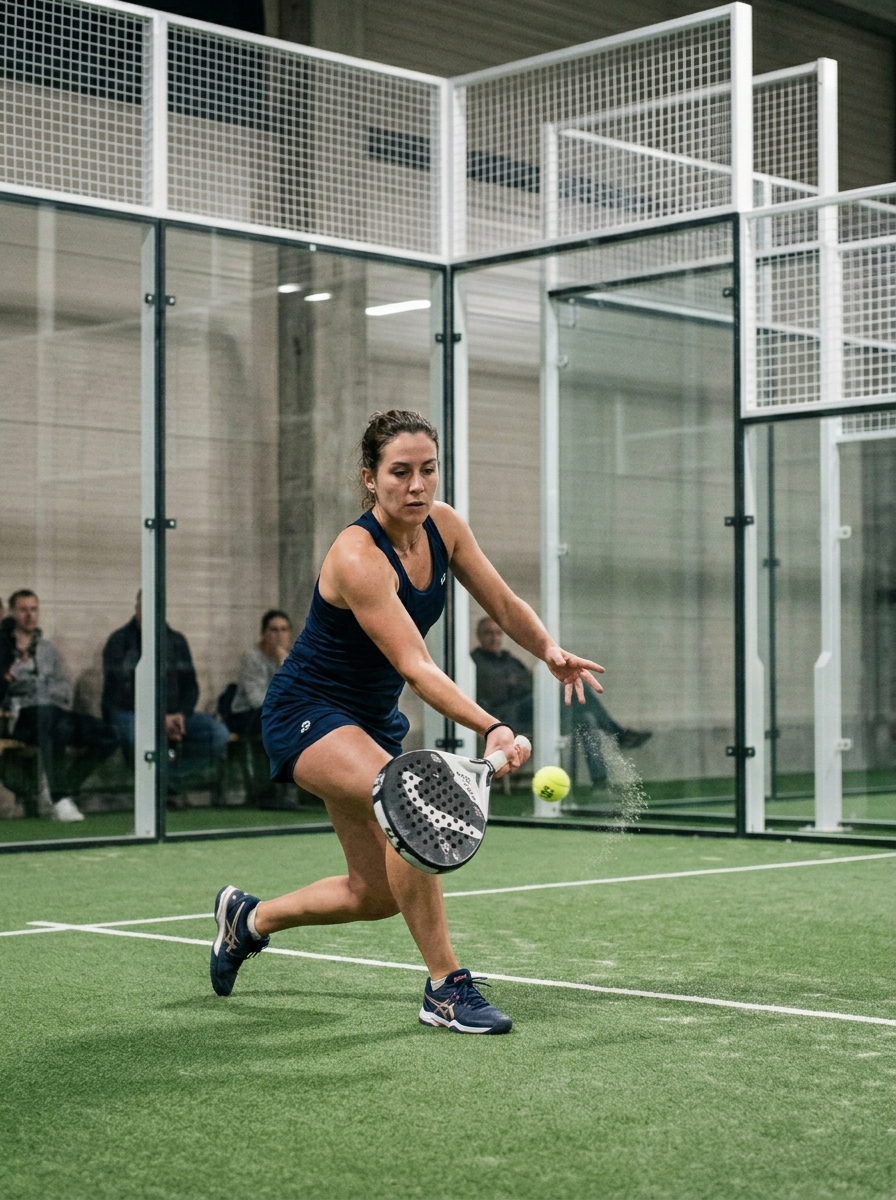
The racket strikes the ball from low to high with a slightly closed face, generating topspin. The ball bounces higher and deeper, pushing the opponent towards the back of the court and the rear glass.
Effective against players who struggle with high balls, but technically demanding. A poorly executed kick stays short and offers an easy ball to attack.
Lob serve
A soft, high serve designed to create unusual bounces against the back glass. The ball arrives with a pronounced arc and bounces deep in the opponent’s court, destabilising the receiver’s position.
Underused at most levels, the lob is nevertheless an excellent change of pace that breaks the opponent’s automatisms.
Body serve
More than a type of spin, this is a placement strategy. Regardless of the rotation used (flat, slice or kick), the ball is directed straight at the hip or torso of the opponent. The receiver ends up cramped, their swing amplitude reduced, their angle options limited.
Alternating body serves with open serves (wide or down the T) prevents the opponent from settling into a comfortable rhythm.
Serve technique: the fundamentals
Grip, stance and ball drop
The continental grip is the universal grip for the serve. Imagine you are shaking hands with your racket or holding a hammer. This grip offers the flexibility needed to execute all serve variations without changing grip.
The starting position: feet shoulder-width apart, front foot pointing towards the net, body slightly turned towards the target service box. Body weight is evenly distributed.
The ball drop is the key to consistency. Drop the ball (do not toss it upward) from waist height with your non-dominant hand, slightly in front of your body. A consistent drop = a consistent contact point = a consistent serve.
The swing motion
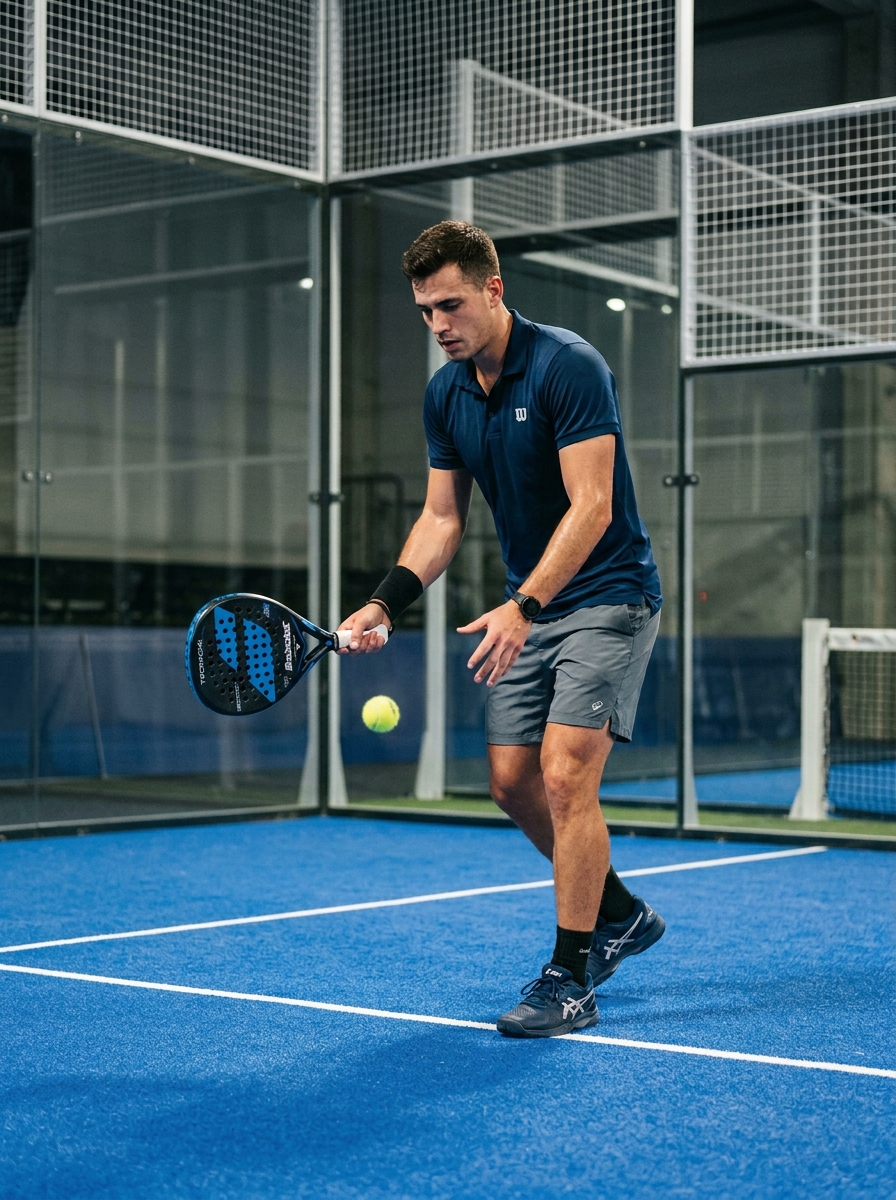
The swing is a pendulum motion, fluid and continuous, comparable to a bowling action. The racket starts behind the body and moves forward and slightly upward. Contact is made at the highest point of the bounce, at the centre of the racket face.
Three common mistakes to avoid:
- A jerky motion (seeking power instead of fluidity)
- Contact too low (not waiting for the top of the bounce)
- An excessive backswing (which disrupts timing)
The follow-through to the net
The padel serve is not an end in itself. It is the first shot of a sequence that should bring you to the net. From the moment of the strike, the natural movement of the body should continue forward: 2 to 3 steps towards the net.
The speed of your serve should be proportional to your ability to move forward. A controlled serve that gives you time to take position at the net is infinitely more valuable than a missile that pins you at the back of the court.
Serve placement strategy
In padel, placement beats power at every level of play. The reason is simple: since the serve is hit underhand and below the waist, raw power is physically limited. Aces virtually do not exist, even among professionals.
The 4 strategic placement zones:
- Wide towards the glass: the ball bounces in the box then deflects off the side glass, forcing the opponent into an uncomfortable position and limiting their return angles
- Down the T (centre): reduces the receiver’s angles and often targets their backhand (the weaker side for the majority of players)
- At the body: targets the opponent’s torso, producing a cramped return with little swing amplitude
- Short: a shorter serve can surprise a receiver accustomed to positioning at the back of the court
Observe your opponent. If they stand near the T, serve wide. If they shift to the side, target the body or the T. Reading their position is your greatest asset.
Mistakes that ruin your serve
1. Seeking power before placement. This is the number one mistake of players coming from tennis. A powerful but poorly placed serve comes back faster and harder. Always prioritise accuracy.
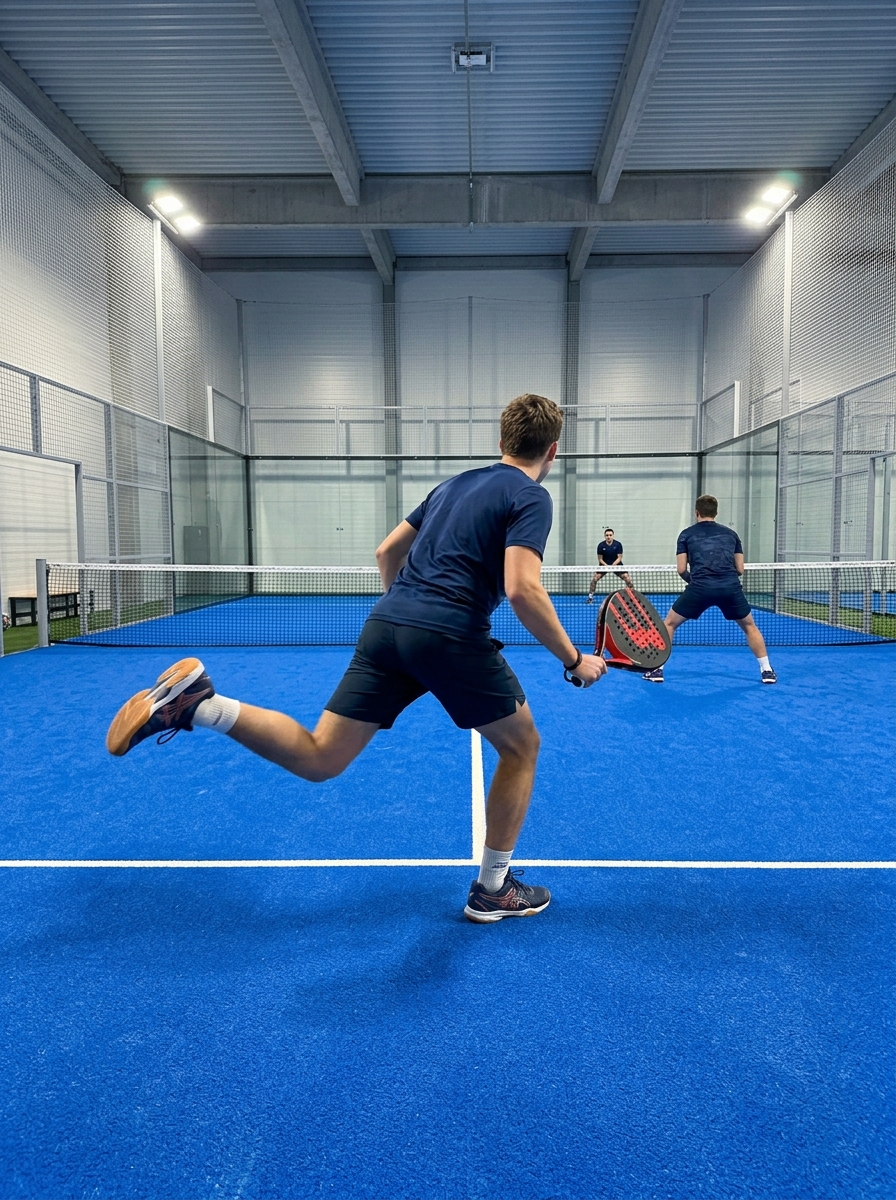
2. Staying at the back after serving. Padel is won at the net. A player who serves and stays rooted behind the service line gives control of the point to the opponent. Serve and move forward, every single time.
3. An inconsistent ball drop. Tossing the ball instead of dropping it, or dropping it from different heights each time, ruins the consistency of the contact point.
4. Avoidable foot faults. Standing too close to the line and stepping on it during the motion. Get into the habit of positioning yourself 10 to 15 centimetres behind the line.
5. Serving without a plan. Sending the ball “into the box” without thinking about placement or what comes next. Every serve should have an intention: target zone, chosen spin, planned movement after the strike.
6. Repeating the same pattern. Always serving to the same spot with the same spin allows the opponent to adapt. Vary your targets and rotations to remain unpredictable.
For a deeper look at typical beginner errors, check out our guide to common padel mistakes.
How the pros serve: Coello, Galan, Lebron
The best players in the world perfectly illustrate that the padel serve is a tactical art, not a display of force.
Arturo Coello has one of the most aggressive serves on the circuit. Coming from tennis, he generates heavy topspin and above-average speed. His body serve is particularly formidable, combining power and tight angles towards the back glass.
Alejandro Galan (former world number 1) relies on consistency and intelligent placement. His reliable slice stays low and deflects off the side glass. His preparation is unusual, with a high and long backswing that transfers a lot of energy into the ball while keeping contact below the waist. He varies his patterns from match to match, making anticipation difficult.
Juan Lebron (multiple WPT champion) uses an original approach: he starts 2 to 3 steps behind the service line, drops the ball slightly ahead of him and walks into the serve to generate momentum with his legs. His constant variation of speed and spin prevents opponents from finding a return rhythm.
The common thread among these three players: none of them is looking for the ace. They use the serve to force a weak return and take the net in the best possible conditions.
Drills to improve your serve
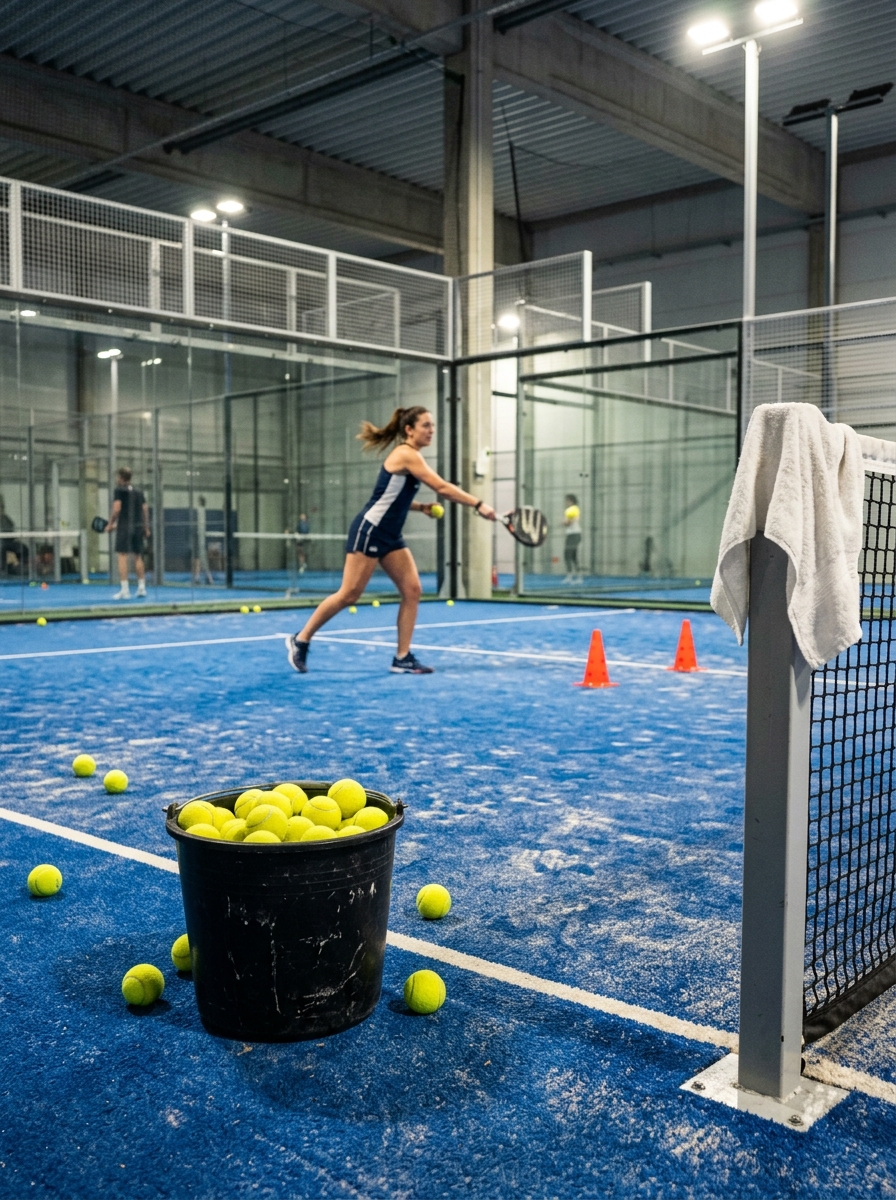
Target drill: place cones or towels in the 4 strategic zones of the service box (wide, T, body, short). Serve 10 balls to each target. Record your success percentage and compare from one session to the next.
100-ball session: dedicate an entire training session to the serve. Alternate between serve types (flat, slice, kick) and sides (deuce, advantage). The goal is consistency, not speed.
Serve + net approach: serve and immediately take 2 to 3 steps towards the net. A partner returns so you can play a volley. This drill builds the net approach reflex that most players lack.
Pressure simulation: serve sets of 10 balls and count those that land in the box. Set a target (8 out of 10). When you reach it, add a constraint (slice only, backhand side only).
Film yourself: record your serve from the side and from behind. Check the grip position, contact height, swing fluidity and follow-through trajectory. Compare with videos of professional players.
To complete your preparation, our article on warming up before a padel match will help you arrive on court in the best possible condition.
9 myths about the padel serve
1. “After 3 lets, it’s a fault.” False. FIP rules set no limit on the number of consecutive lets. The serve is replayed as many times as necessary.
2. “You can toss the ball in the air and hit it like in tennis.” False. The ball must bounce on the ground before being struck. This is one of the fundamental differences from tennis.
3. “The serve should be a weapon to win the point.” False. The padel serve is a rally starter, not a winning shot. Its role is to start the rally in favourable conditions.
4. “If the ball hits the back glass after bouncing in the box, it’s a fault.” False. The back glass is perfectly playable. Only the metal fence makes the serve a fault.
5. “The receiver must stand in the service box.” False. The rules set no mandatory position for the receiver. In practice, they stand behind the box, but nothing obliges them to.
6. “You can serve from anywhere behind the line.” False. The server must be in the correct half of the court: between the centre line (imaginary extension) and the side wall.
7. “The backhand serve is not allowed.” False. No rule requires a forehand serve. The backhand serve is perfectly legal, though less common among beginners.
8. “Both feet must stay on the ground.” False. Only one foot must remain in contact with the ground. A step forward is allowed, provided the line is not crossed before the strike.
9. “Waist = belt level.” The rule says “at waist level or below”, interpreted relative to each player’s body. It is not a fixed height. Professional umpires judge on a case-by-case basis.
To better understand the subtleties of scoring and point counting, check out our guide to padel scoring.
Can you serve overhand in padel?
No. FIP regulations (article 6.4) require the ball to be struck at waist level or below. Additionally, the ball must bounce on the ground before the strike, which makes an overhand serve physically impossible. This rule was established from the creation of padel to encourage rallies and the accessibility of the sport.
Can the ball hit the glass after the serve?
Yes, if it is the back glass. After bouncing in the service box, the ball may hit the back glass and the receiver can play it normally. However, if the ball hits the metal fence (on the sides or above) after bouncing in the box, it is a fault.
How many serves do you get in padel?
Two, like in tennis. If the first serve is a fault, the server has a second. Two consecutive faults constitute a double fault and the point is lost. Note that platform tennis, a related sport, only allows one serve.
Is the backhand serve allowed in padel?
Yes. No rule requires a forehand serve. The backhand serve is perfectly legal and can even add an element of surprise, as the ball trajectory differs from a standard forehand serve.
Is there a let limit in padel?
No. Contrary to a very widespread belief, FIP rules set no limit on the number of consecutive lets. The serve is replayed as many times as necessary until a valid serve or a fault is produced.
From theory to practice
You now know the official rules, the 5 types of serve and the technical keys to improve. All that is left is to put it all into practice on the court.
To organise your next Americano or Mexicano tournament and test your serves in real conditions, download Americano Padel Manager for free on iOS and Android. Tournament creation in under 2 minutes, real-time ranking, optimal player rotation. Try the premium features free for 7 days.